31 Jul 2026
|17 min
Consumer product testing
Validate product safety, performance, and user satisfaction through consumer product testing. Enhance reliability and meet market expectations efficiently.


Your team’s excited. You’ve spent months – maybe years – perfecting your product, and now it’s ready to hit the market. But before you launch, how do you know it’s truly ready?
Consumer product testing is what separates guessing from knowing, and hoping for the best from launching with confidence.
Though typically associated with physical products, this process applies just as much to digital offerings. Whether you’re developing the next big app, launching a new service, or exploring user experience design, the same principles apply. It’s all about seeing through your customers’ eyes – understanding what works, what doesn’t, and what needs to be adjusted. Testing confirms that your product resonates with your audience, rather than just hoping it will.
Key Takeaways
Risk mitigation: Consumer testing replaces guesswork with data, significantly reducing the risk of product failure and costly post-launch fixes.
Versatility: Methods like usability testing, prototype testing, and concept testing apply equally to physical goods and digital interfaces.
Data balance: Successful testing combines quantitative metrics (success rates) with qualitative insights (user opinions) to provide a complete picture.
Iterative process: Testing should be a continuous cycle throughout development, not a one-time event before launch.
Scalability: Modern platforms allow for rapid participant recruitment and remote testing, making professional research accessible for any budget.
The benefits of consumer product testing
Effective testing doesn’t just protect you from costly missteps – it builds the foundation for a successful launch. Here’s what a solid testing practice can do for your team and your product.
Reduce the risk of product failure
Thorough consumer testing means you’re not just anticipating user reactions – you’re actively preventing mistakes. Imagine launching a high-tech coffee maker without enough testing, only to find that early users find the interface confusing or the machine prone to clogging. Without prior testing, you might face a surge of returns, negative reviews, and even damage to your brand’s reputation.
Improve product quality
Real-world feedback lets you fine-tune your product one step at a time, turning “good” into “great.” Every round of testing brings new insights that make a real difference, getting your product closer to what users actually need. For example, if you’re testing a fitness app, feedback might reveal navigation issues that you can fix before launch.
Increase customer satisfaction
When your product matches what users want, satisfaction is no longer a gamble. Even small misalignments between what you've built and what users expect can create frustration. Consumer testing helps you capture those subtle signals – the friction points, the "I wish it did this" comments – so you can turn potential complaints into loyalty.
Validate assumptions
Every product starts with a guess – a lightbulb moment about what users might want. But without testing, it’s still just a guess. Consumer testing turns those guesses into informed decisions, allowing you to launch with confidence. Say you’re building a meal-planning app with a unique grocery shopping feature; testing will reveal if users see it as valuable or if they’re seeking something else entirely.
Types of consumer product testing
Understanding the different types of tests you can do will help you pick the best approach for your product. Consumer product testing broadly falls into two categories: physical product testing, where users try tangible goods in real-world settings, and digital product testing, where users interact with apps, websites, prototypes, or digital services. While both share the same goal – gathering honest feedback to improve the product – the methods and tools differ. Here are some key methods for digital product testing.
Usability testing
Usability testing focuses on how easy and intuitive your product is to use – whether that's navigating a mobile app or interacting with a physical device.
By observing real users as they complete tasks, you can pinpoint exactly where friction occurs and what's causing confusion.
Support real-world use cases, so you can pinpoint exactly where users encounter friction before it becomes a bigger problem.
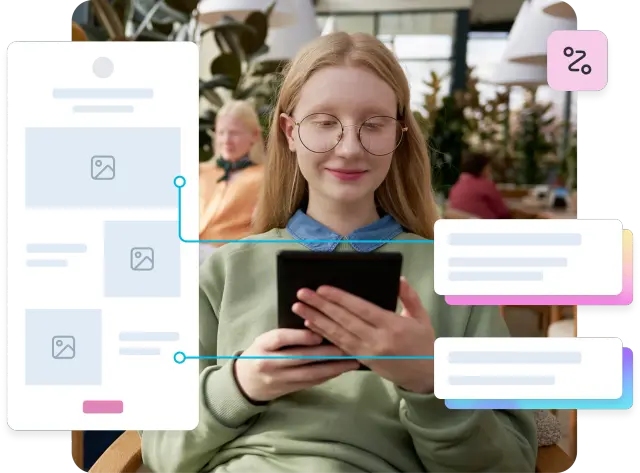
Prototype testing
Gathers feedback on early versions of your product to avoid costly adjustments later.
With Lyssna, you can collect crucial feedback on prototypes, shaping your product confidently from the outset.
Concept testing
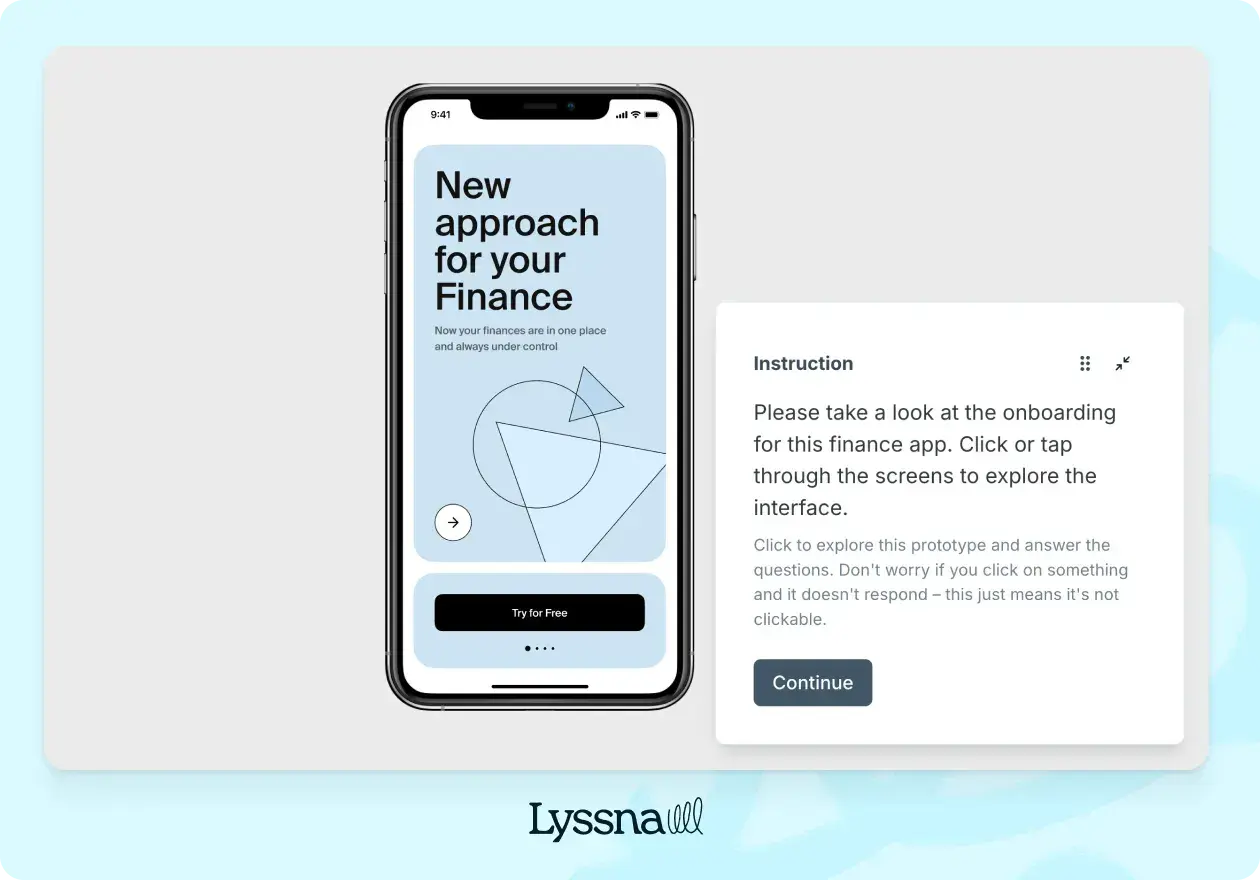
Presents your product idea to gauge interest and appeal before development. Say you’re planning a new fitness app – concept testing reveals if users are excited by the idea or if refinements are needed.
Lyssna’s platform allows for early concept testing, so you can capture initial reactions and make adjustments early.
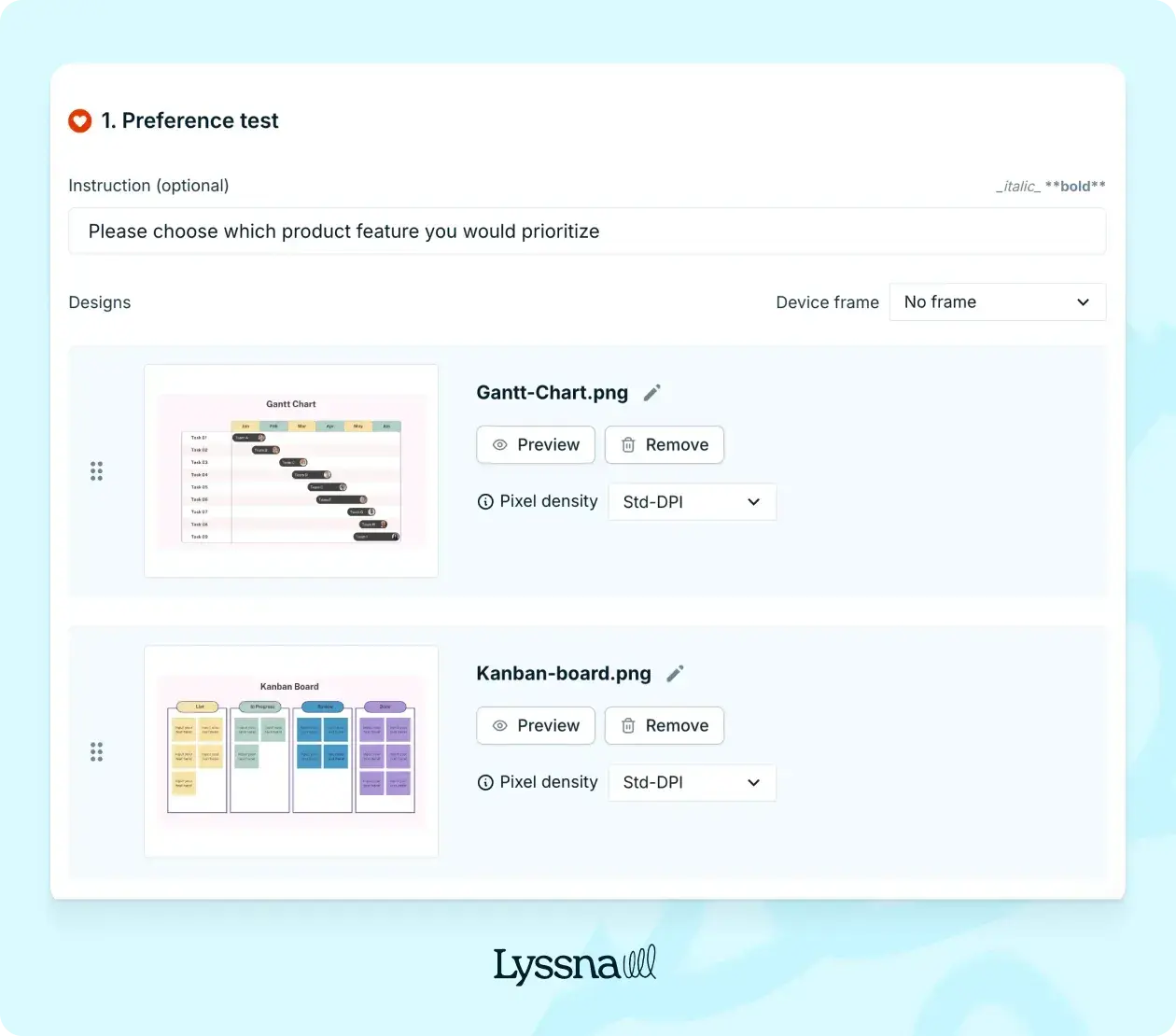
Preference testing
Compares different versions to identify which features users prefer.
With preference testing in Lyssna, we make it straightforward to compare design options side by side and capture clear, direct feedback from your audience.
Survey-based testing
Surveys let you gather structured feedback from a large number of consumers, making them ideal for validating assumptions, measuring satisfaction, or exploring attitudes toward a product or concept.
With Lyssna's survey tools, you can combine quantitative questions (like rating scales) with open-ended prompts to capture both measurable data and rich qualitative feedback in a single study.
How to conduct effective consumer product testing
Effective consumer product testing isn’t just about gathering data – it’s about gathering data that matters most. Here are some steps to help make sure your testing is both productive and insightful.
1. Identify the right audience
First, make sure you’re testing with the right audience. Finding participants who reflect your target market is crucial for gathering relevant feedback. With Lyssna, you can access a diverse research panel of over 690,000 participants, allowing you to recruit individuals based on specific demographic and psychographic traits. This approach ensures the feedback you gather is directly applicable to your market.
2. Design meaningful test scenarios
Design test scenarios that mimic real-world conditions. The goal is to create tasks that reflect how your product will be used in day-to-day life. For example, if you’re testing a meal-planning app, create a task where users plan a week’s worth of meals. This helps you observe how the product performs under typical use and identify any issues that might arise.
3. Use qualitative and quantitative data
To get a full understanding of your product’s impact, balance quantitative data (like task completion times and success rates) with qualitative feedback, such as user opinions and suggestions. If you're unsure where to begin, exploring quantitative research examples can help clarify the kinds of metrics and methods that provide meaningful insights. This dual approach allows you to measure performance while also understanding the user experience on a deeper level – something best uncovered through qualitative methods of research.
4. Iterative testing
Finally, it's worth keeping in mind that consumer product testing works best as an ongoing practice, not a one-off event. The most successful products go through multiple rounds of testing, using feedback from each phase to make improvements. This iterative product development process is key to building a product that truly meets the needs of your customers.
Tools and platforms for consumer product testing
Digital testing platforms have significantly reduced the time and overhead involved in gathering and analyzing feedback — making it more realistic to run research regularly, even with tight timelines and limited resources.
Popular tools
Lyssna: An all-in-one user research platform that lets you run both moderated and unmoderated UX studies seamlessly. With features for usability testing, user interviews, and surveys, Lyssna is designed to be user-friendly and adaptable. Whether you’re testing a digital product or exploring consumer behaviors, Lyssna gives you the tools to gather valuable data quickly and effectively.
UserTesting: UserTesting focuses on capturing real-time feedback for usability and customer experience testing, with templates and AI-driven analysis for observing user behavior. It's a capable platform, though it's primarily designed for larger organizations with dedicated research teams and bigger budgets – which may make it less accessible for smaller teams or those earlier in their research journey.
SurveyMonkey: SurveyMonkey is a widely used survey and market research platform that helps teams collect consumer feedback at scale. With customizable questionnaires, audience targeting, and built-in analytics, it's a solid option for gathering quantitative data on product concepts, preferences, and satisfaction.
Advantages of using software to scale testing
Using testing platforms offers several benefits, particularly when you need to scale your efforts.
Efficiency: Testing platforms streamline the entire workflow – from recruitment to analysis. With Lyssna, for example, you can recruit participants from your target demographic in as little as 30 minutes, freeing up your team to focus on acting on results rather than managing logistics.
Scalability: Digital tools make it easy to expand your testing to include a wider range of participants and test scenarios, providing insights from a more diverse audience.
Rich data collection: These platforms support a balance of quantitative data and in-depth user feedback, giving you a comprehensive view of your product’s strengths and areas for improvement.
How Bower Collective used consumer product testing
To show the real-world impact of effective consumer product testing, let’s look at Bower Collective, a company known for its eco-friendly home and personal care products.
Bower Collective: Founded in 2020 and based in Bath, UK, Bower Collective is a fast-growing startup focused on reducing plastic waste through eco-friendly, reusable products. Their circular economy approach, including reusable pouches, reflects their commitment to sustainability.
Challenge: When Fiona Cliffe joined as Head of Product, she noticed a gap in Bower Collective’s understanding of potential customers who valued sustainability but hadn’t yet adopted eco-friendly products. They needed unbiased insights to understand these customers’ motivations better. As Fiona explains, “We needed to reach people who knew they should be reducing plastic but didn’t know where to start.” For this, the team required a way to ask non-leading questions – a key reason they chose Lyssna.
Solution: Fiona, already familiar with Lyssna, implemented the tool at Bower Collective for its affordability, flexible credit system, and ability to target specific demographics, like women over 40 within certain income levels. With Lyssna, her team quickly recruited participants, gathering a diverse pool of interviewees within days. This efficiency allowed them to act on insights fast.
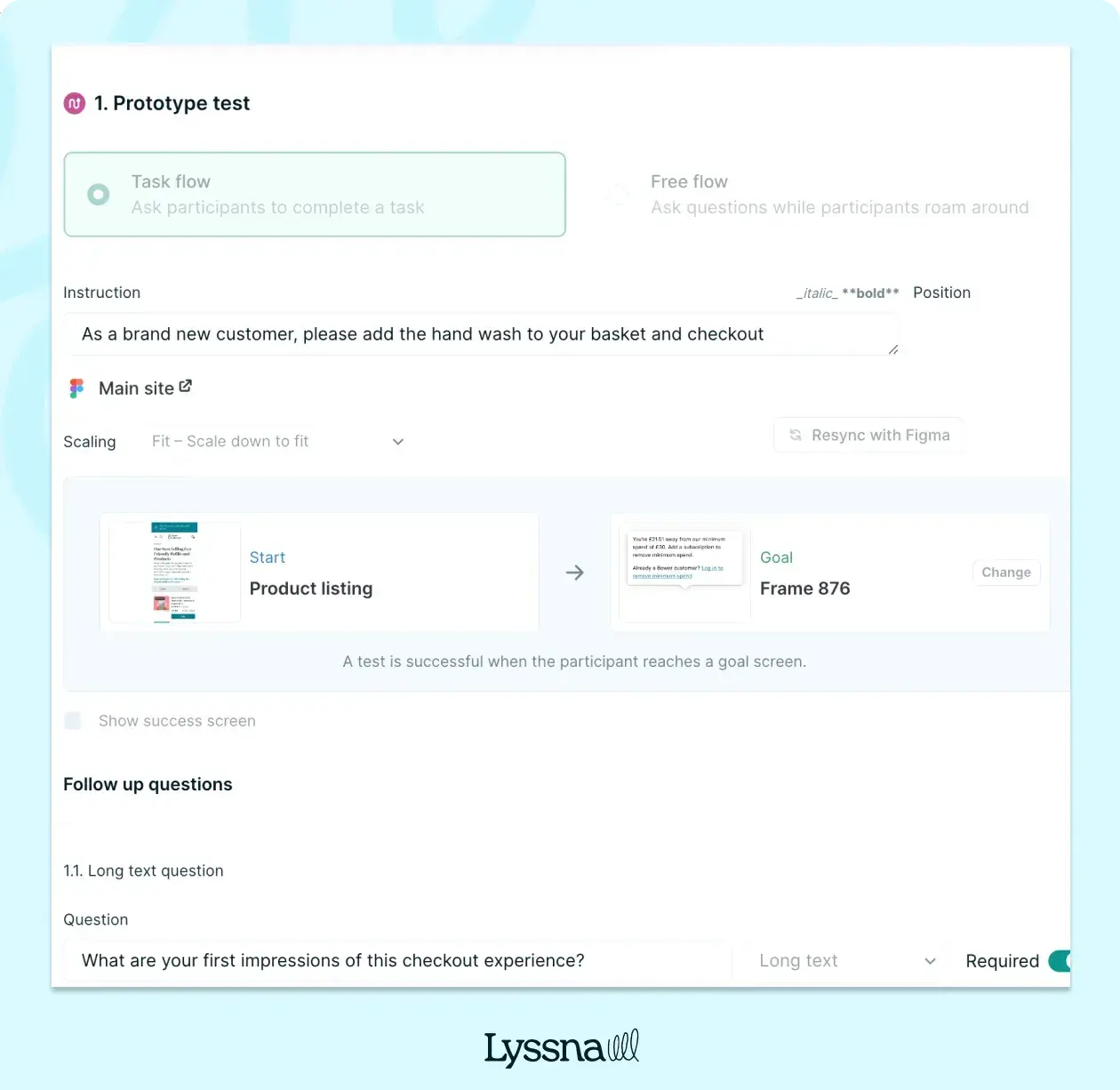
Beyond interviews, they used Lyssna’s Figma integration for prototype testing and conducted card sorting to understand how customers perceived product value – comparing their £3.49 eco-friendly cleaner with standard 50p supermarket bleach. This feedback informed Bower Collective’s website and email messaging, focusing on the benefits customers cared about most.
Results and impact: With insights from the research conducted using Lyssna, Bower Collective refined their product positioning and marketing, aligning their messaging with customer values. Adjustments to onboarding, product messaging, and content better highlighted their environmental benefits, increasing new customer engagement and confidence.
Lessons learned
Unbiased insights lead to better decisions: The Bower Collective team crafted neutral questions, resulting in authentic feedback that strengthened their product and messaging.
Iterative testing refines results: From prototype testing to card sorting, ongoing feedback provided actionable insights that improved both product design and customer experience.
Through consumer testing with Lyssna, Bower Collective gained a clear understanding of eco-conscious customers, helping them connect more effectively with their market and support sustainable change.
Tips for maximizing the value of consumer feedback
Consumer feedback holds real potential to shape better products – and getting the most from it often comes down to how you structure your questions, who you ask, and what you do with the results.
Ask the right questions
Be specific: Craft questions that are clear and targeted. Avoid general questions that might yield vague answers. For example, instead of “Do you like the product?” ask, “What specific product features did you like or dislike?”
Avoid leading questions: Keep questions neutral to prevent steering responses in a certain direction. This ensures honest and unbiased feedback.
Avoid common pitfalls
Biased sampling: Make sure your sample represents your entire target audience to avoid skewed data.
Consider context: External factors like current events or personal circumstances can influence responses. Keep these in mind when analyzing feedback for a more accurate interpretation.
Use feedback to make data-driven decisions
Identify trends: Look for repeated themes in the feedback. These trends can guide major product adjustments or enhancements.
Quantify when possible: Where relevant, quantify feedback. This could include rating scales for satisfaction or numerical data on feature usage. Quantified data can be especially persuasive when making the business case for research decisions — whether you're presenting to your immediate team or preparing insights for a board-level conversation.
Engage regularly with respondents
Build relationships: Treat your customers as part of your extended team. Engaging with them consistently can turn them into brand advocates.
Close the loop: When you make changes based on feedback, let customers know. This follow-up shows their input is valued, increasing their investment in your product.
The future of consumer product testing
Consumer product testing has evolved rapidly, driven by advances in technology and shifting consumer expectations. What were once emerging trends are now standard practice for many teams. Here are the key forces shaping how teams approach product testing today – and where things are heading next.
AI in testing
AI has moved from experimental to essential in product testing. Teams now use AI-driven tools to automate analysis of user behavior patterns, generate summaries of qualitative feedback, and surface trends across large datasets that would take hours to identify manually. AI also enables more personalized testing experiences – tailoring tasks and questions to specific user segments for faster, more relevant results.
Remote testing
Remote testing is now the default for most digital product teams, enabling feedback collection from users regardless of location. Platforms like Lyssna support both moderated and unmoderated remote tests, so you can connect with users in their real-world environments – on their own devices, in their own time. This approach enables faster testing cycles and access to a wider pool of participants, making it straightforward to gather feedback across different geographies and demographics without needing in-person sessions.
The role of data analytics
Data analytics is becoming a cornerstone of consumer product testing. Advanced analytics tools help sift through large volumes of feedback and user data, uncovering actionable insights. By leveraging analytics, you can move from simply reacting to feedback to proactively addressing potential issues before they arise.
Predictions for the future
Looking ahead, expect continued advances in automation, real-time feedback analysis, and AI-powered synthesis. We're also seeing a growing emphasis on continuous research – where product testing is embedded into every stage of the product life cycle rather than treated as a pre-launch checkpoint. Teams that build testing into their regular workflow will be better positioned to innovate, iterate quickly, and respond to changing customer expectations.
Why consumer testing matters for your product launch
Consumer testing is a critical step that can make or break the success of your product launch. Here’s why it’s essential.
Reduce the risk of failure: Identify and resolve issues before they become costly mistakes to avoid releasing products that don't resonate or function as expected.
Enhance product quality: Use iterative feedback to refine usability, leading to fewer returns and higher overall quality.
Boost customer satisfaction: Ensure the finished product delivers the exact experience the target audience expects, driving repeat purchases and organic growth.
Gain stakeholder buy-in: Use data-backed proof to validate your approach and secure investment or leadership approval.
Incorporating consumer testing into your product development process ensures your launch is built on reliable, real-world feedback. For research teams, product designers, and PMs looking to build with confidence — not guesswork — consumer testing is one of the most reliable ways to validate decisions, reduce rework, and create products that genuinely resonate with the people who use them.
FAQs about consumer product testing
Pete Martin is a content writer for a host of B2B SaaS companies, as well as being a contributing writer for Scalerrs, a SaaS SEO agency. Away from the keyboard, he’s an avid reader (history, psychology, biography, and fiction), and a long-suffering Newcastle United fan.
You may also like these articles