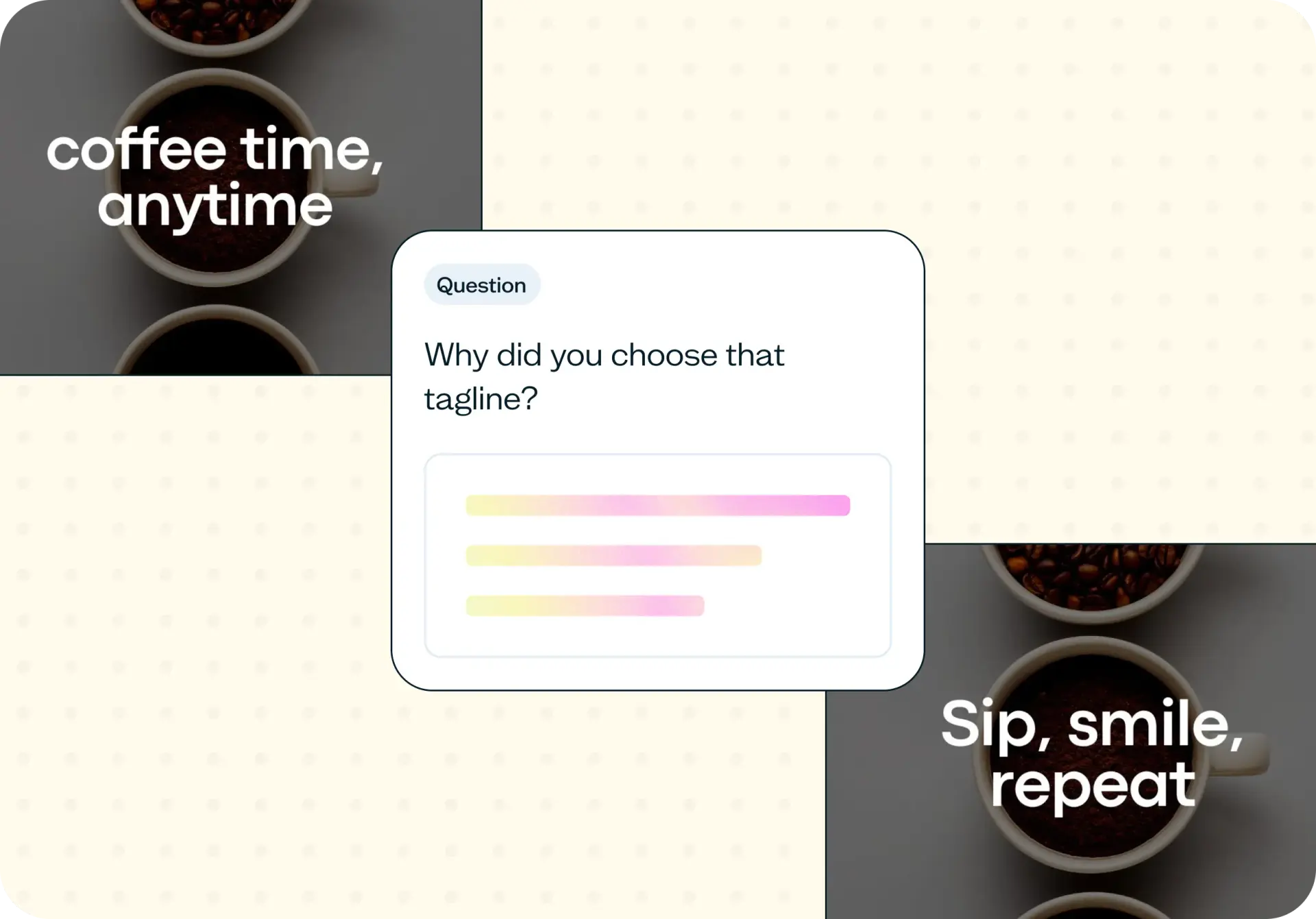

A tagline that works in the room doesn't always work in the market. Tagline testing means showing two or more options to people who match your target audience, then asking which one they prefer, which one they remember, and why. This preference testing template, sometimes searched for as slogan testing, gives you the result, the reasoning behind it, and the statistical confidence to commit a production budget to the right line.
The problem with untested taglines
Most taglines are chosen in a room, not in the market, and the two don't always agree. A line can survive internal rounds precisely because everyone reviewing it already knows the product too well to hear it fresh. The result: a campaign built around a tagline nobody outside the company has actually reacted to, and an expensive rewrite once it's already in production.
Common signs your tagline needs testing:
You have multiple strong directions and no clear way to choose between them.
The decision is heading toward whoever's most senior in the room, not whoever's closest to the audience.
The tagline was written by people who know the product too well to hear it with fresh ears.
You're about to commit production budget to a line nobody outside the company has seen.
You're entering a new market where the phrasing may not carry the way it does at home.

This template will help you discover
Once you have your tagline candidates, this template helps you see how they land with the audience you actually wrote them for.
Which tagline resonates
The straightforward preference result: which tagline your target audience picks over the others, and by how much, so you're not relying on a tied vote in a workshop.
Whether the result actually holds up
Lyssna flags automatically when a lead isn't statistically significant, so a narrow margin doesn't get mistaken for a clear winner. You'll know whether to act on the result or collect more responses first.
The reasoning behind the choice
A follow-up question asks participants why they picked the tagline they did, in their own words. You get more than a selection: the reasoning behind it and what it made them think about your brand.
Where audiences diverge
How different segments of your audience respond, so you can see whether one tagline works everywhere or whether your best option depends on who's reading it.
What you'll test
Most teams run this template with two to four tagline variations, plus a follow-up question capturing the reasoning behind each choice. You can also add profiling questions before the preference test (role, industry, or anything else useful for segmenting the result later), though the core of the template is the tagline comparison itself.
It works whether your tagline is destined for a single channel or needs to hold up everywhere your brand shows up: your website, social posts, out-of-home, and digital ads. A line that only works in one format usually isn't the one you want to commit to.
This same setup works for a brand-new tagline or for testing a current line against a proposed replacement, so you can see whether a rebrand direction is actually stronger than what you already have.
How the research works
Preference test
At its core, this template runs as a preference test: participants see your tagline options and choose the one they prefer. It's a well-established method that suits short copy particularly well, since a tagline only takes a participant a few seconds to read and react to. That keeps the test quick without losing signal.
Lyssna also flags automatically when a lead isn't yet statistically significant, so a narrow margin doesn't get mistaken for a clear winner. For the full mechanics of setting one up, our guide to preference testing walks through it step by step, and you can preview the Preference testing feature directly.
Follow-up question and conditional logic
The preference result tells you what people picked. A follow-up question tells you why, personalized with merge logic to name whichever tagline a participant actually chose, so the question reads naturally rather than as a generic prompt. That kind of merge logic is available on Lyssna's paid plans, not the free plan, so factor that in if a personalized follow-up is central to what you need from this test.
One honest boundary worth stating plainly: this template measures preference and the reasoning behind it among people who match your target audience. It's a strong signal for the writing decision in front of you – but it doesn't predict how a finished campaign will perform once it's live.
How to use this template
Start exploring with a free plan. Sign up for a Lyssna free plan to preview this template and add your own tagline options. Two to four tends to work best.
Customize your follow-up questions. Focus on a specific angle like recall or emotional reaction, or use the default set if it already covers what you need.
Recruit participants who match your target audience. Use your own network or Lyssna's research panel so the preference you measure reflects the people the tagline actually needs to work on.
Launch the test and review results. Check the preference result, whether it's statistically significant, and the reasoning behind each answer as responses come in.
See what it looks like when two rebrand tagline directions go head-to-head, including which line wins on preference, which one sticks in memory, and the reasoning participants gave for each.
When to use this template
Use this template before you commit production budget to a tagline, not after. It's the right call when you have multiple strong directions on the table and need more than an internal opinion to choose between them, or when you're entering a new market and aren't confident the phrasing will carry.
It's especially useful during a rebrand, when the tagline is one of the most visible things you're changing and the cost of getting it wrong is highest. And it's the fastest way through when an internal decision has stalled: stakeholders need outside evidence, not another opinion in the room, to break the tie and move the project forward.
Who this template is for
This template is built for brand and marketing teams weighing final tagline directions before a launch, copywriters who want real audience evidence behind a recommendation, and product marketers introducing a new product line or repositioning an existing one.
It's just as useful for founders who need more than their own gut feeling before committing budget to a line. Whether you're a team of one validating your own instinct or a marketing department settling a split vote, this template gives everyone in the room the same evidence to work from.
FAQs about tagline testing
You may also like these templates
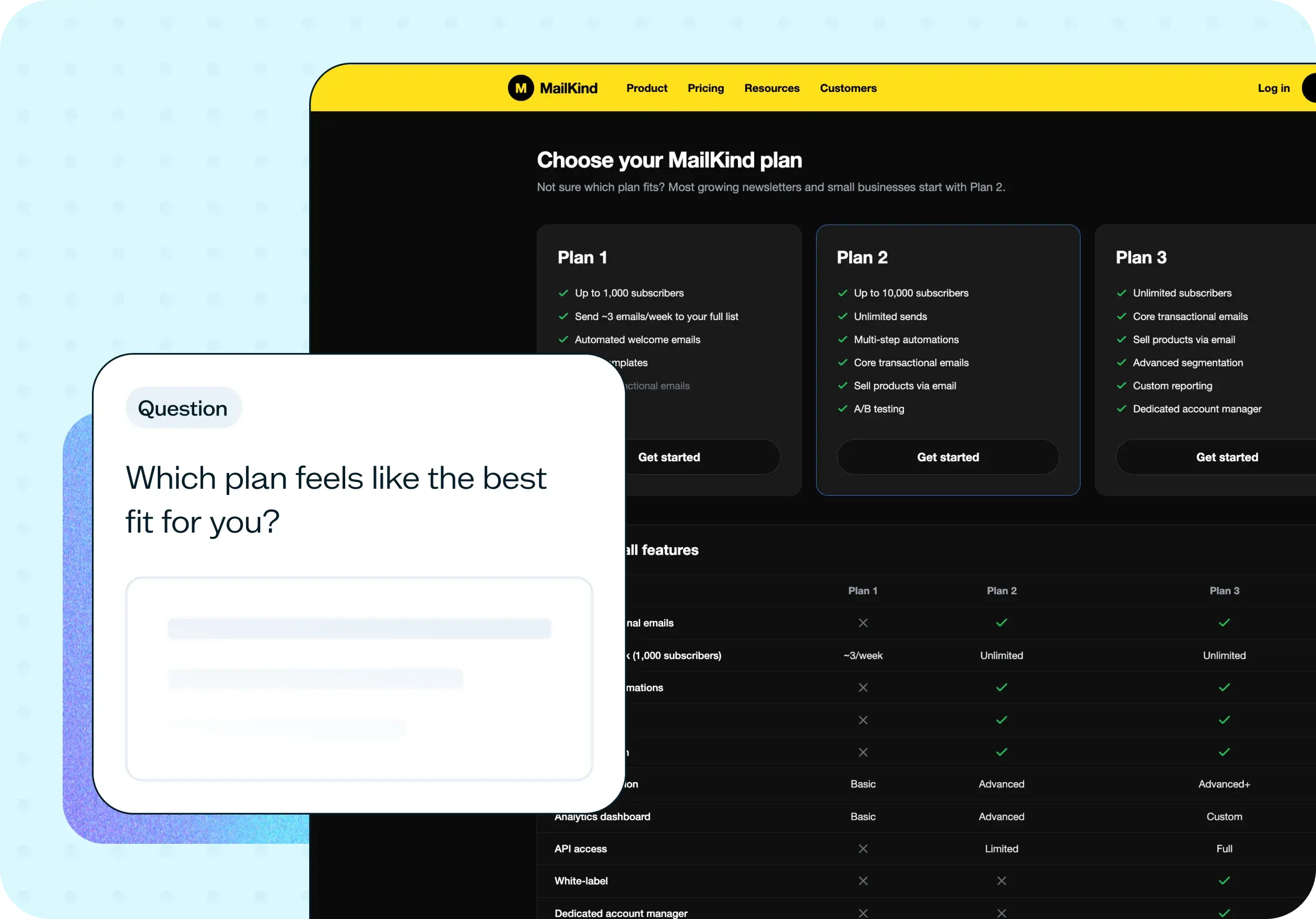
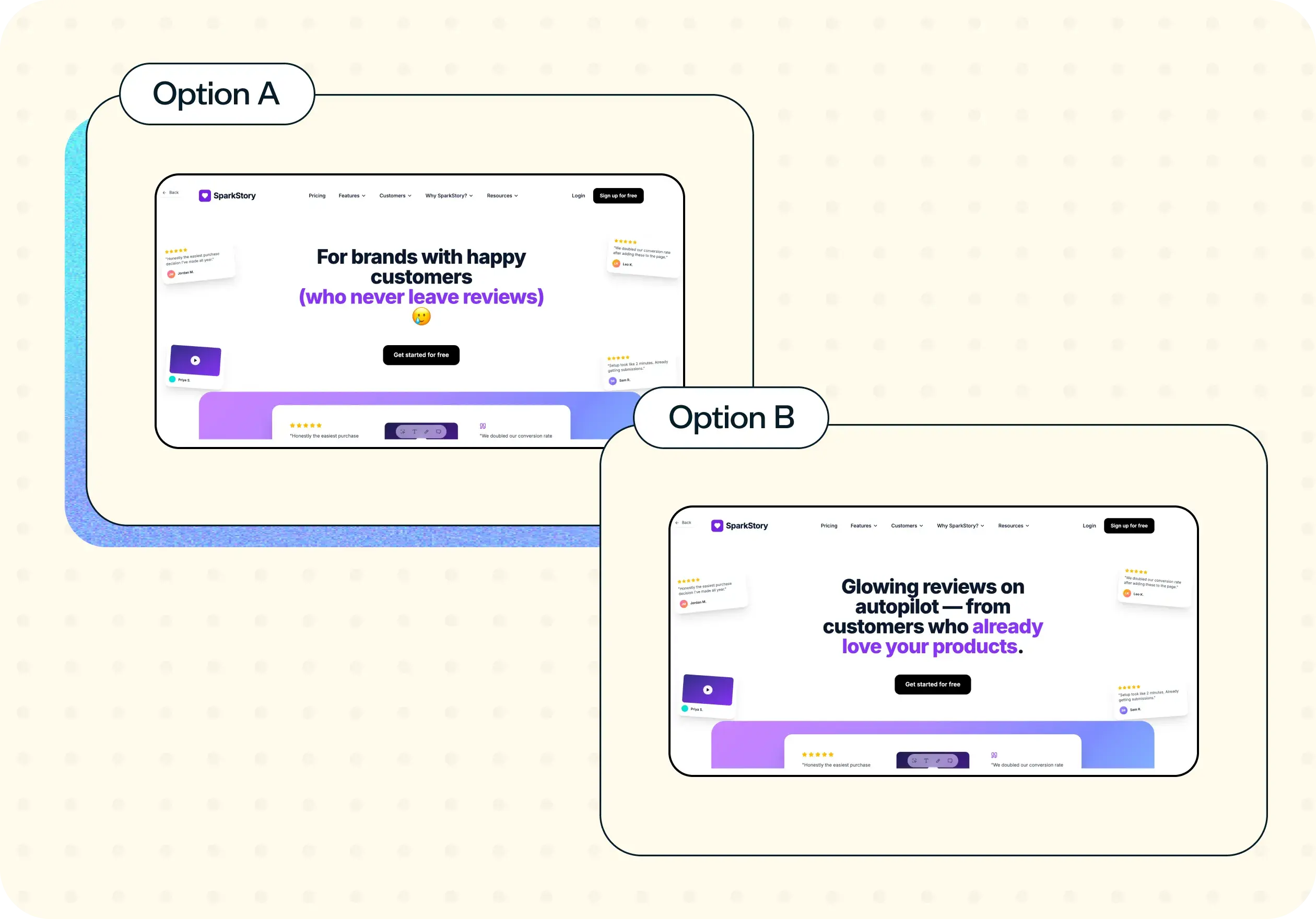
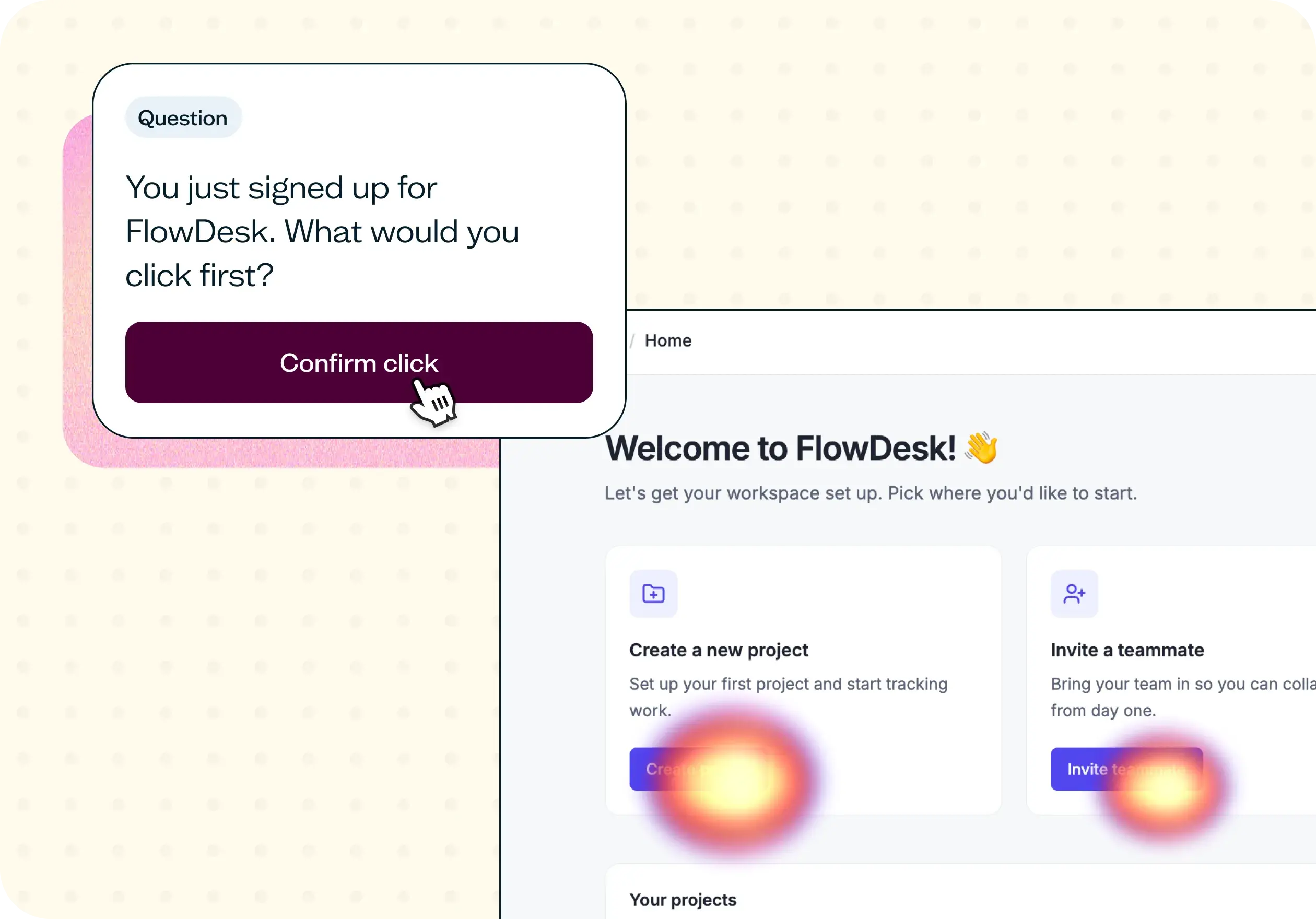

We use Lyssna tests to help us make decisions for various projects. From web and mobile design to marketing activities.

Luther Lowe
VP Public Policy & Gov. Affairs at Yelp