
Overview
Purchasing decisions rarely come down to one person, but the people who matter most aren't always easy to spot from a job title alone. Some research topics require participants who have directly influenced, recommended, or signed off on a software or tool purchase. This template helps you tell them apart from everyone else, before your sessions begin.
Finding the people who have a say in purchasing decisions
When you're studying procurement behavior, software evaluation, or purchasing decisions, the gap between someone who uses a tool and someone who selected it is huge.
A participant who sits in on demos but has no influence over the final call will give you a very different picture than someone who built the shortlist, negotiated pricing, or pressed approve. Include enough of the wrong people and your insights start reflecting the experience of observers, not decision-makers.
The problem is that "works in tech" or even "involved in software purchasing" can mean almost anything. Without a structured screener, you're relying on participants to self-report accurately, and most people tend to interpret their involvement generously when they want to qualify for a study.
This template takes the ambiguity out of it. Two screener questions establish not just whether a participant was involved in a recent purchasing decision, but what their role in that decision actually was, so you only progress the people whose perspective genuinely reflects the buying process you're researching.
This template will help you discover
Whether a participant has been directly involved in selecting software or a service for their organization in the past 12 months.
What their actual role in that decision was.
Which factors matter most to them when evaluating a tool.
How this purchasing authority screener works
Most people overestimate their involvement in a purchasing decision. The two questions in this screener are designed to cut through that, quickly and without making participants feel interrogated.
The first question establishes recent, direct involvement: have they been part of selecting software or a service for their organization in the last 12 months? Recency matters here – purchasing contexts shift, and someone who evaluated tools three years ago may not reflect how decisions get made today.
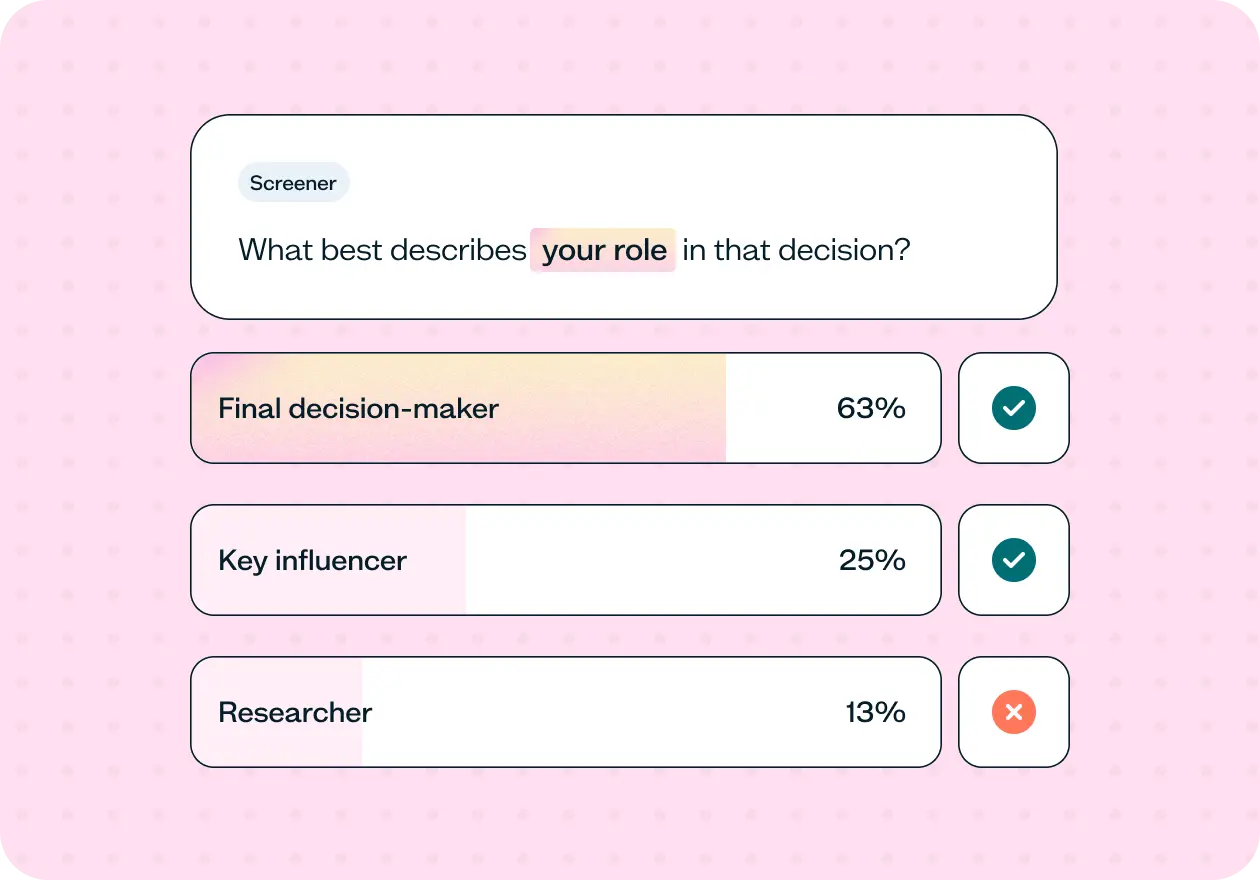
The second question is where the real filtering happens. Rather than asking participants to describe their seniority or job title – both of which can be misleading – it asks them to describe their role in the decision itself.
The screener questions in this template work as a standalone filter that can be added to any Lyssna study type – not just the survey it's paired with here.
Here's what it unlocks across different research methods:
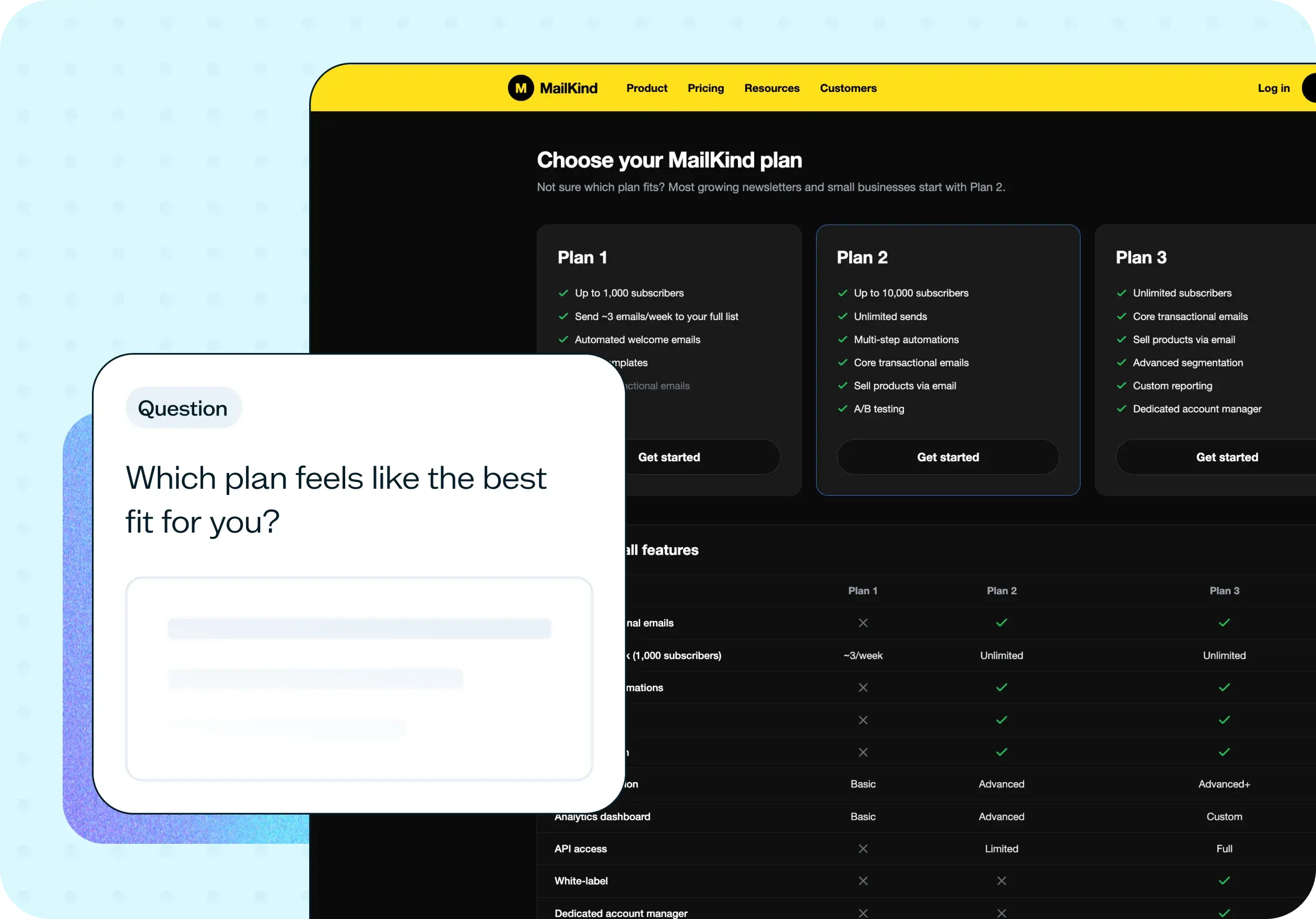
Prototype test – Useful when testing product flows, pricing pages, or procurement tools. You want feedback from people who know what they're evaluating, not people seeing that type of interface for the first time.
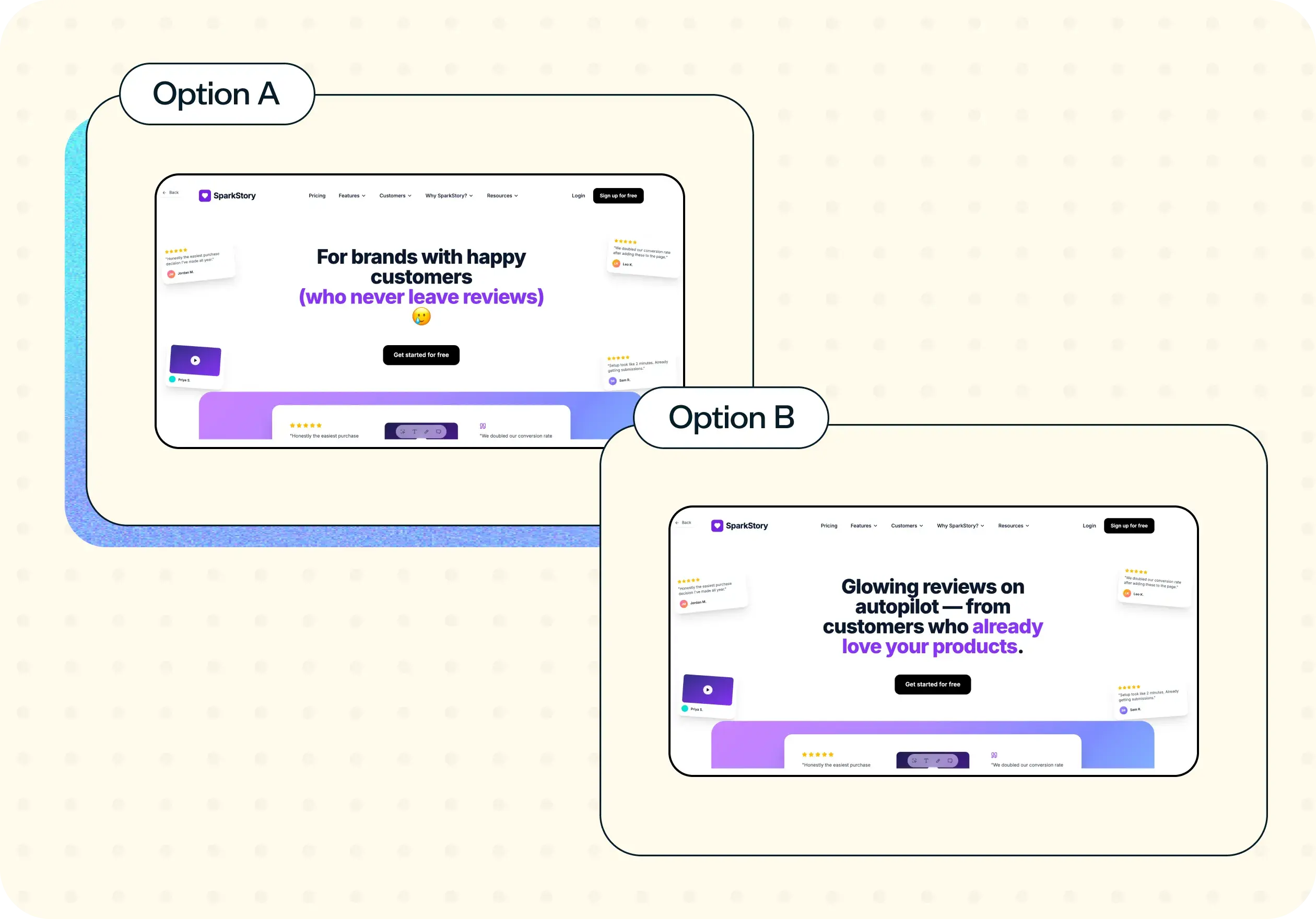
Concept test – When testing new product concepts or pricing models with a B2B audience, screen for real purchasing involvement so reactions reflect genuine evaluator instincts, not casual impressions.
How to use this template
Start by replacing the software/tool/service placeholder with something specific to your study. "Project management software" or "HR platform" will feel more relevant to participants than a generic reference and relevance helps them answer accurately.
Next, review the qualify/disqualify logic on the role question and make sure it maps to your research goals. The default qualifies final decision-makers and key influencers, and disqualifies researchers and people with no involvement. If your study is specifically about the evaluation process rather than the final decision, you might want to bring researchers back in. Think about whose perspective actually answers your research question.
Once your results are in, take a moment to review the screener data before analysis begins. The breakdown of roles and involvement levels tells you exactly who made it through and gives you the context you need to interpret what they said.

See an example of the screener results
Click the ▸ icon to reveal screener results
When to use this template
When your study involves procurement, software evaluation, or purchasing behavior and you need participants who have actually been part of that process.
When your research touches on budget, vendor comparison, or internal sign-off processes and you need participants who have been through that experience recently.
When you're researching pricing models, vendor selection, or software buying journeys and need participants who have navigated that process firsthand.
Who this template is for
UX researchers running usability or concept studies who need participants with genuine purchasing experience.
Product and design teams building B2B tools who want feedback from the people who actually evaluate and approve software.
Researchers studying enterprise software, procurement platforms, or vendor selection processes where the buyer and the end user are often different people entirely.
Fintech and HR tech teams whose products go through formal procurement cycles and need research that reflects how those decisions actually get made.
FAQs about screening for purchasing authority
You may also like these templates

The navigation test is god's gift to UI designers. It probably has the best power-to-simplicity ratio of any software, ever.

Nick Franklin
CEO at ChartMogul