
Overview
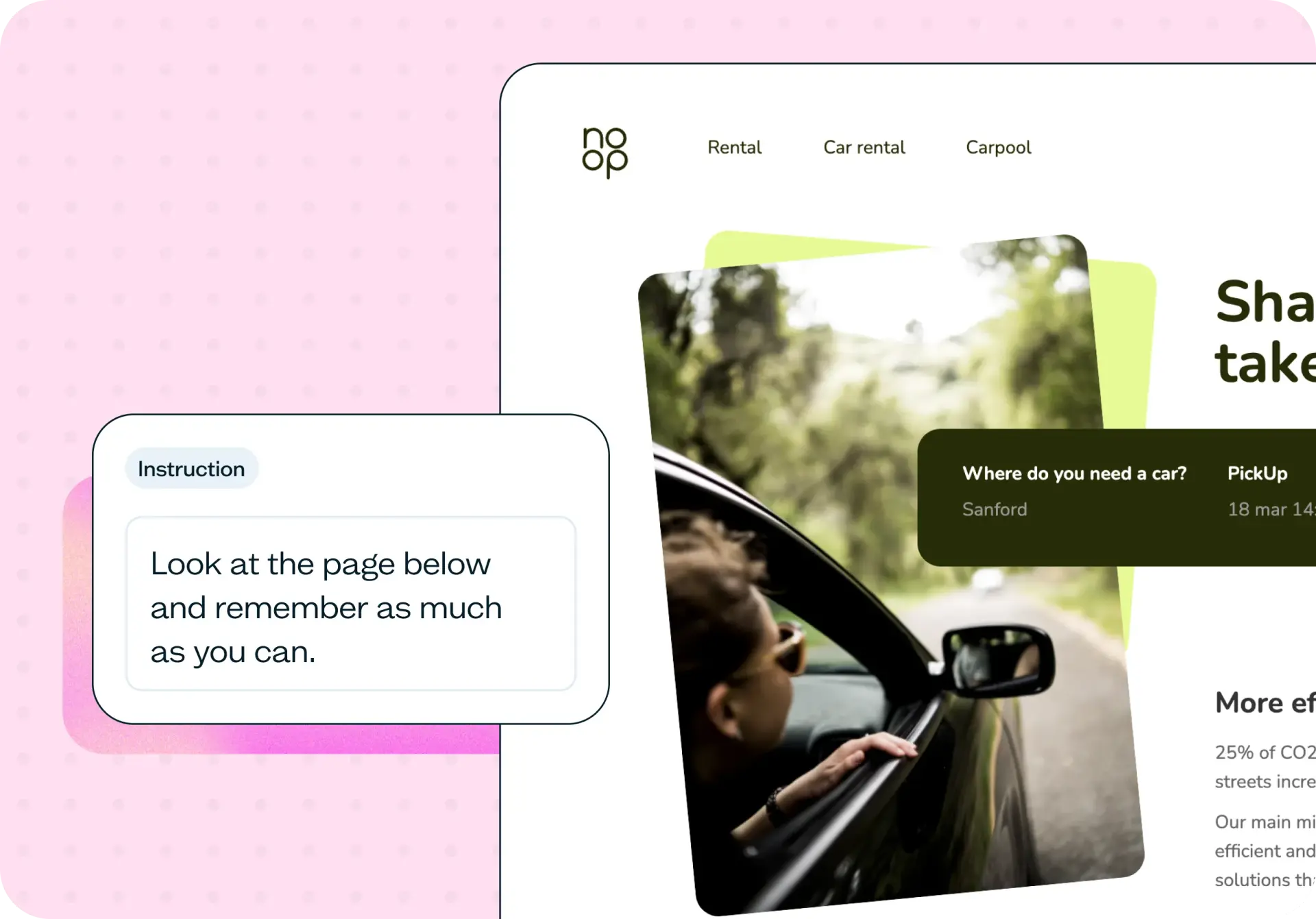
Test your marketing messages with real users to find out what lands – and what doesn't. Using five second testing, this template shows you how participants respond to your headline, copy, or ad text in seconds, revealing what they understood, remembered, and felt compelled to do.
The problem with untested marketing messaging
Most messaging decisions are shaped by internal opinions – not by the people you're actually trying to reach. Teams write headlines, craft value propositions, and finalize campaign copy based on what feels right to them. Then they launch.
When a message misses the mark, the evidence shows up in the data: low click-through rates, poor ad performance, rising acquisition costs, and conversion that falls short of projections. By then, budget has already been spent.
The harder problem is that vague or misaligned messaging often isn't obviously wrong. It just doesn't connect. Users don't immediately understand what you're offering, they don't feel motivated to act, and they move on. Without testing, teams can't tell whether the message is the issue or something else entirely.
Testing your marketing messaging with real users before launch closes that gap. You find out what your audience actually takes away – not what you intended to communicate.

This template will help you discover
Understanding what's working in your messaging means going beyond open-ended feedback. This template gives you structured insight into how your audience interprets and responds to your copy:
Which messages resonate – and which fall flat.
What language drives clarity, interest, or trust.
Which benefits matter most to your target audience.
What confuses, distracts, or disengages users.
Which messaging themes outperform others.
How your audience perceives your positioning.
Messaging tests translate user feedback into actionable improvements you can take directly into your next iteration.
What you'll test
Strong messaging works on several levels at once. This template helps you evaluate each one:
Headline clarity: Does the headline communicate value quickly and accurately?
Key benefits: Which benefits users actually care about – not which ones you assume they do.
Tone and language: Is the copy compelling and appropriate for your audience?
Call-to-action strength: What motivates users to take the next step, and what creates hesitation?
Competitive differentiation: Does your messaging help you stand out, or does it blend in?
How the research works
This template combines five second testing with follow-up questions to uncover not just what performs, but why. Here's how each approach contributes:
Five second testing shows participants your messaging for a short window – typically 5–20 seconds – then asks them to recall what they saw. This reveals whether your headline and key message are landing at a glance, which is how most marketing copy is actually consumed.
Follow-up questioning lets you go deeper. After the exposure, participants answer questions about clarity, memorability, and persuasiveness. Their written responses often reveal exactly what confused them or what made them more likely to act.
Rating scales measure appeal, clarity, and relevance quantitatively, giving you a score you can compare across message variations or track over time.
Conditional logic routes participants to additional questions based on their answers – so if someone says the message wasn't compelling, they're asked what would make it more persuasive.
This mix gives you both the signal and the story behind it.
How to use this template
Click "Use this template" and log in to your Lyssna account. No account yet? Start exploring with a free plan.
Upload your marketing asset. This could be a tagline, homepage headline, ad copy, email subject line, or landing page section. Because this is a five second test, participants will only see it briefly – so what you upload should reflect how your message appears in context.
Customize the follow-up questions to match your goals. The template includes questions about initial impression, key message recall, intended action, and language appeal. You can adjust wording or add questions specific to your campaign.
Set your exposure duration. The default is 10 seconds, but you can adjust this depending on how much text you're testing. Shorter durations work well for headlines; longer ones suit more detailed copy.
Recruit participants and launch your test. Use Lyssna's research panel to reach your target audience, or share the test link with participants from your own network.
Review your results. You'll see participant recall, written responses to each follow-up question, rating scale distributions, and – if you used conditional logic – what users say would make the message more persuasive.
When to use this template
This template fits a wide range of messaging moments, whether you're preparing for a major campaign launch or making smaller refinements:
Before launching ads or paid campaigns.
When crafting or updating a homepage value proposition.
During brand positioning or repositioning work.
Before email marketing sends – especially subject lines.
When conversion is lower than expected and messaging may be a factor.
When entering a new audience segment or market.
Who this template is for
Whether you're a solo marketer validating copy before a launch or a growth team systematically testing messaging across channels, this template adapts to your context:
Marketing teams refining positioning and campaign language.
Growth teams improving landing page and ad conversion.
Product teams aligning around how to communicate core value.
Brand teams ensuring messaging consistency across touchpoints.
Founders validating messaging before investing in a campaign.
FAQs about marketing messaging testing
You may also like these templates

The navigation test is god's gift to UI designers. It probably has the best power-to-simplicity ratio of any software, ever.

Nick Franklin
CEO at ChartMogul