How Hexagon scaled user research across a global enterprise
We speak with Nikolay Nikolov, and Keirstin Townsend about reducing research bottlenecks, doubling study output, and building a scalable research practice across distributed global teams.
Summary
See how Hexagon scaled user research with Lyssna, cutting study setup time to 48 hours, doubling research output across global teams.

Key results at a glance
48-hour study setup time replaced weeks-long research processes.
Launched studies doubled across global design teams.
Connected previously siloed teams through a single enterprise research platform.
Enterprise-grade governance enabled scalable, compliant research.
“Partnering with Lyssna was definitely the right decision for our team. It enabled structural adaptations of user validation across the whole organization.”
Nikolay Nikolov
Senior UX/UI Designer
Hexagon’s story

Company stats:
Industry: Technology / Manufacturing Intelligence
Headquarters: Stockholm, Sweden
Employees: 24,000+
Hexagon is a global technology company serving millions of users across aerospace, automotive, and general manufacturing. With 24,000+ employees and a product portfolio spanning decades, it’s an organization where precision and trust aren’t just values, they’re the foundation everything is built on.
Within that organization, two teams sit at the center of how design decisions get made.
In Zurich, Nikolay Nikolov is a senior UX/UI designer in Hexagon’s Innovation Hub, part of the Core UX team. “I design scalable UX systems and interaction patterns for complex enterprise products,” shares Nikolay. “My focus is making digital experiences reliable, consistent, and easy to use in environments where precision really matters.”
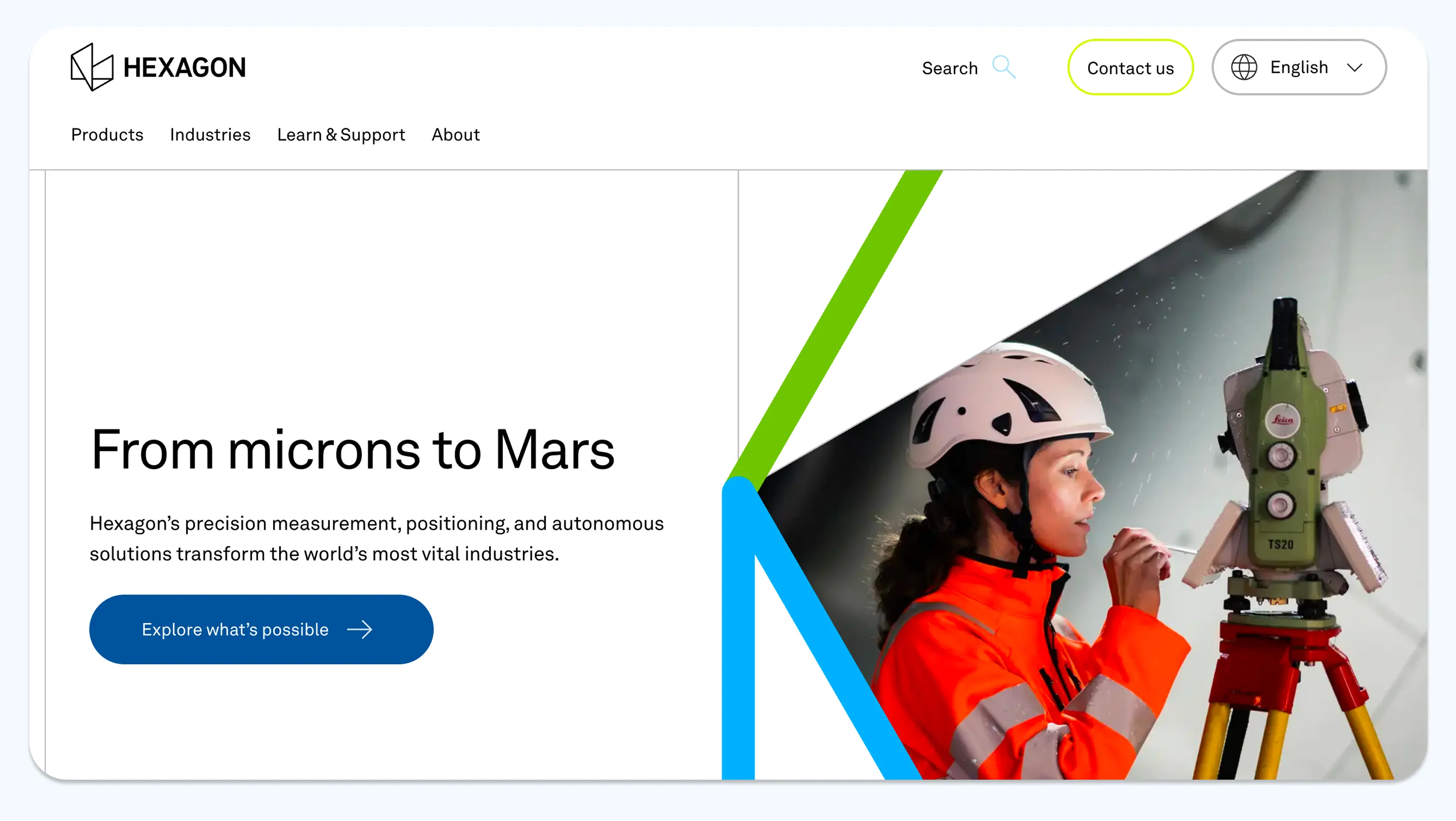
In the Manufacturing Intelligence (MI) division, Keirstin Townsend is a senior design program manager overseeing a portfolio of Computer-Aided Design (CAD), Computer-Aided Manufacturing (CAM), and production software systems. Keirstin connects experience design, product management, and development, focusing on making software easier to use, faster to adopt, and more valuable for Hexagon's global customers.
Together, they represent the scope of Hexagon’s design operation: a large, decentralized organization with teams distributed across countries and time zones.
"Everything in our organization is precise and has to be trustworthy."
Nikolay Nikolov
Senior UX/UI Designer
What research challenges was Hexagon facing?
At a company the size of Hexagon, with teams spread across countries and divisions, the barriers to good research compound quickly.
Research that couldn’t keep pace with design
Before Lyssna, Hexagon’s teams wanted to do research – but the process was heavy, and heavy processes don’t scale inside fast-moving product teams.
Coordinating research across a global portfolio meant designers couldn’t always test when they needed to. Timing depended on availability, relationships, and coordination that rarely lined up neatly.
In the MI division, the design team had no direct path to users. “Previously, we were highly dependent on product management teams or sales teams for access to customers or users of our products. At times, that might slow us down or become a bottleneck,” shares Keirstin.
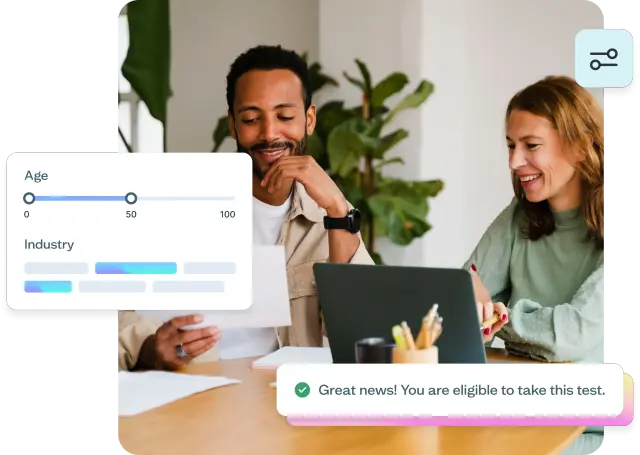
Recruiting research participants was very labor-intensive. Maintaining participant lists, managing outreach frequency, and protecting sales relationships meant that research, while possible, was never simple.
The administrative weight fell on individuals. Keirstin personally tracked study counts, credit usage, and research operations – work that had little to do with the insights themselves.
Over-reliance on internal experts
When external users weren’t accessible, teams turned inward. “Our teams were really dependent on internal subject matter experts to stand in for real-world users,” shares Keirstin. This meant decisions were sometimes validated by people too close to the product.
Plus, many Hexagon products have been in the market for more than 30 years. So testing with participants with deep institutional knowledge, while valuable, created blind spots.
"We’re really looking for people – real modern users of our products – who might come in with a fresh perspective and identify gaps we might not realize, because we’re just too close to our products."
Keirstin Townsend
Senior Design Program Manager
Teams working in isolation
As Hexagon is spread across different countries and divisions, teams were operating in isolation. “Our organization is decentralized … every division could use different research tools. And then there was not really communication between them,” shares Nikolay.
The impact was that “design validation depended heavily on timing and availability. Some teams tested early, others tested late. This created uncertainty in decision making and slow progress in complex projects.”
The cost of catching problems late
In a complex enterprise environment, discovering usability issues after development is expensive and it was a risk Hexagon was determined to reduce.
Nikolay’s team saw this firsthand when testing a complex onboarding flow with role permissions. Early feedback showed users misunderstood the access logic. Because they caught it before development, they were able to fix it. "We avoided redesigning the system later," he shares.
In a precision engineering environment, a late-stage redesign isn't a quick patch. It's costly rework – and getting ahead of it became a clear priority.

Before Lyssna: Regulatory roadblocks, slow insights, and decision paralysis when internal opinions didn’t align.
After Lyssna: Same-day research results, data-driven decisions, and 80% faster user onboarding.
How Lyssna helped
Hexagon needed more than a research tool. They needed a platform that could meet enterprise-grade requirements, integrate into existing workflows, and actually get adopted across a distributed global organization.
Enterprise governance
For an organization of Hexagon’s scale, research infrastructure has to meet the same standards as its products. Security, governance, and controlled access were non-negotiable requirements from the start.
“What stood out with Lyssna was the ability to manage research, access, usage, and scaling in a coordinated way across multiple teams. We could define how teams access it, how it is managed, and how it is sustained over time."
Nikolay Nikolov
Senior UX/UI Designer
For Keirstin’s team, the enterprise plan also resolved long-running frustration around credit management, something that had slowed the team down with previous tools. “Managing credits across an enterprise account can be really complicated, but since using Lyssna, it’s been a lot more flexible,” shares Keirstin.
Participant quality and compliance
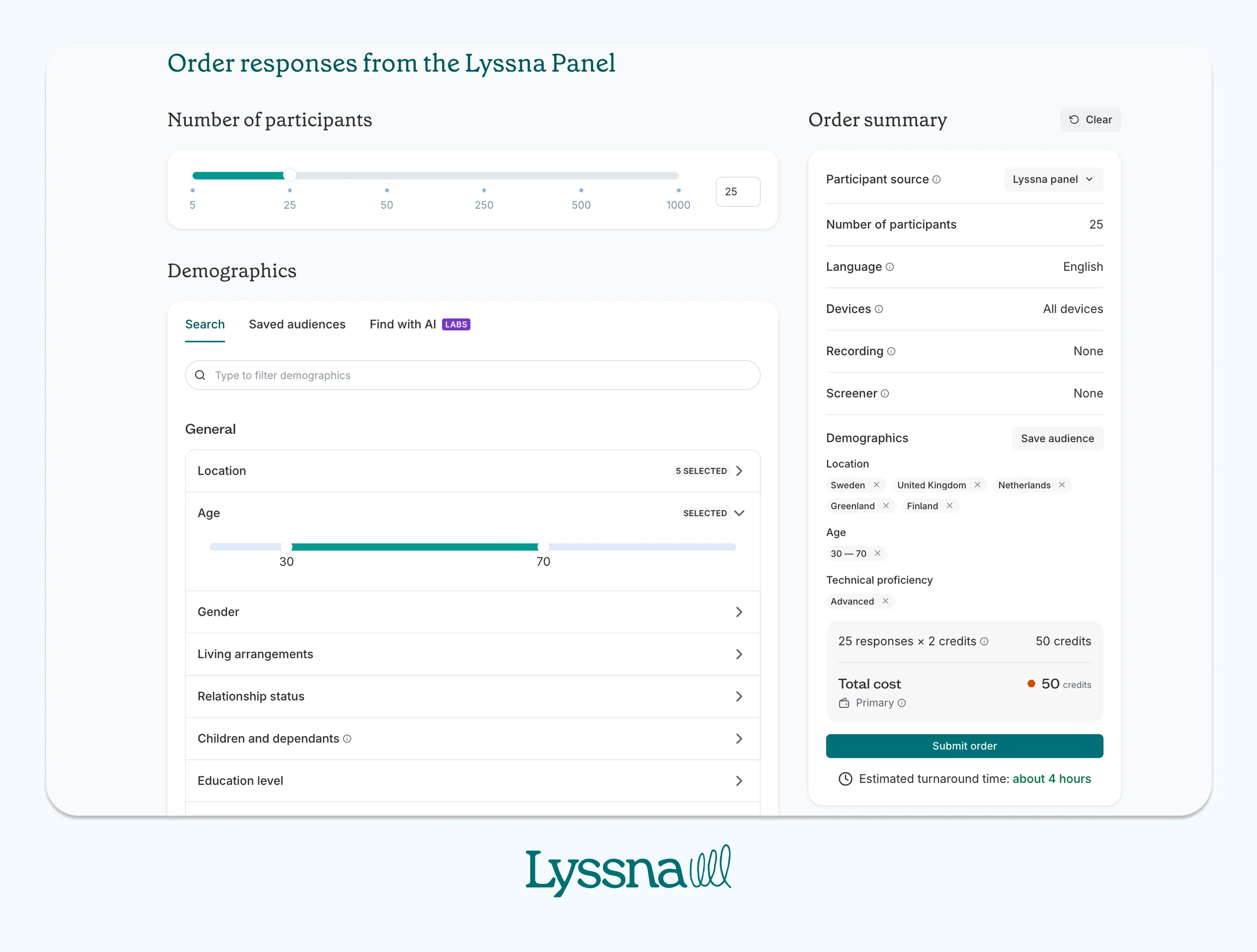
Previous tools had raised concerns about response quality for Hexagon’s teams. Lyssna’s built-in research panel was a major factor for Keirstin.
“Having a pool of participants who are ready to be engaged with, who are eager to provide their feedback, and have already been pre-screened and agreed to maintaining some degree of confidentiality – that is very valuable for our organization from a compliance and legal standpoint, from a design ops standpoint, and from a business strategy standpoint.”
Figma integration and ease of adoption
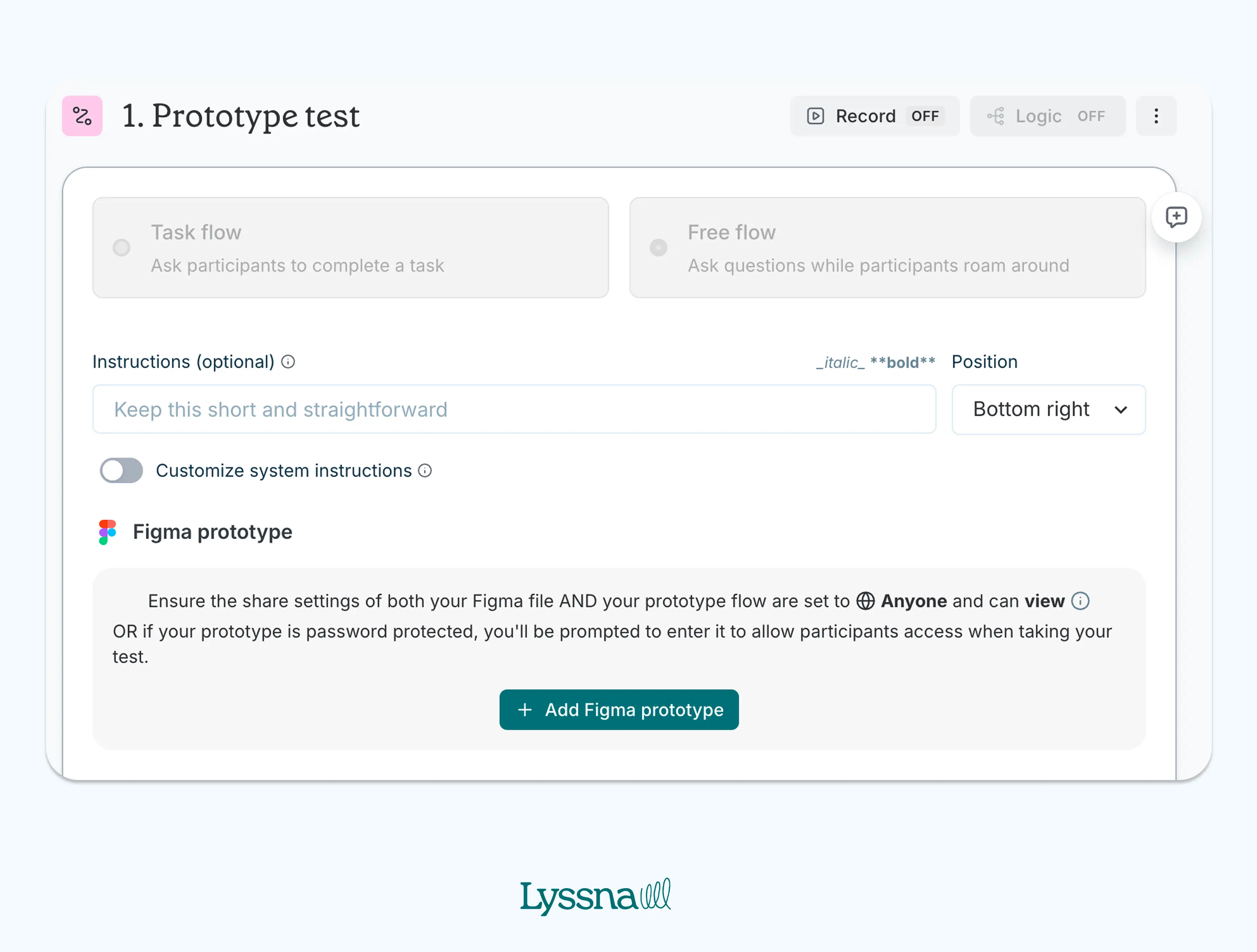
For adoption to happen at scale across Hexagon’s many teams, they needed a tool that would slot into how designers were already working. Lyssna's accessibility and integration with Figma removes friction at the point where it matters most:
“We could just integrate our user flows that we created in Figma and paste the link to Lyssna. That was something that really made our workflows easier,” adds Nikolay.
Enterprise-level support
Support quality also influenced Hexagon’s confidence in moving forward with Lyssna. Nikolay describes the Lyssna team as being "structured, responsive, and they understand enterprise requirements. I remember at the beginning we had our requirements list, and the Lyssna team was very cooperative. They even adapted the platform to our needs.”
Keirstin shares her own example that reinforced her confidence. After reaching out about a settings question for a confidential study, she received a same-day response with the right product team member looped in directly.
The results
The impact of adopting Lyssna was immediate and measurable.
Speed unlocked scale
The most immediate shift was how quickly research could actually happen. Previously, launching and synthesizing a study was taking a couple of weeks. After adopting Lyssna, Keirstin shares that “we can craft, prepare and launch a study within 48 hours. That’s not a barrier anymore.
“Waiting one hour and you have your first data of your user testing. That's amazing.”
This speed unlocked something else: volume. With less friction at every stage, designers are able to run more studies, more often.
“We saw the total number of studies that our designers were able to launch double. Without Lyssna, that would not have been possible.”
Keirstin Townsend
Senior Design Program Manager
Earlier validation, less rework
The bigger shift wasn’t just speed, it was timing too. Validation now happens earlier in design and development workflows. As Nikolay shares, “Instead of designing first and checking later, we test assumptions while the design is still flexible.”
This directly reduces rework costs and protects development investment. For Keirstin, the logic is straightforward: “We'd rather make sure that we get it right before we’ve spent developer time building something.”
More confident decision-making
In an organization as complex as Hexagon, design decisions often happen in rooms full of competing priorities. Now, designers can bring data-backed insights into these discussions.
As Keirstin explains: “Lyssna has given our designers confidence to come into complicated conversations and share the voice of the user with product management, sales, and development.
“In a highly matrixed cross-functional team, being able to come in with objective evidence rather than subjective opinion is everything. That’s been really meaningful for our designers.”
Instead of debating what users might do, teams can show what users actually did. Nikolay adds, “The biggest benefit is reliable decision-making at scale. We can move forward knowing solutions are validated.”
A connected organization
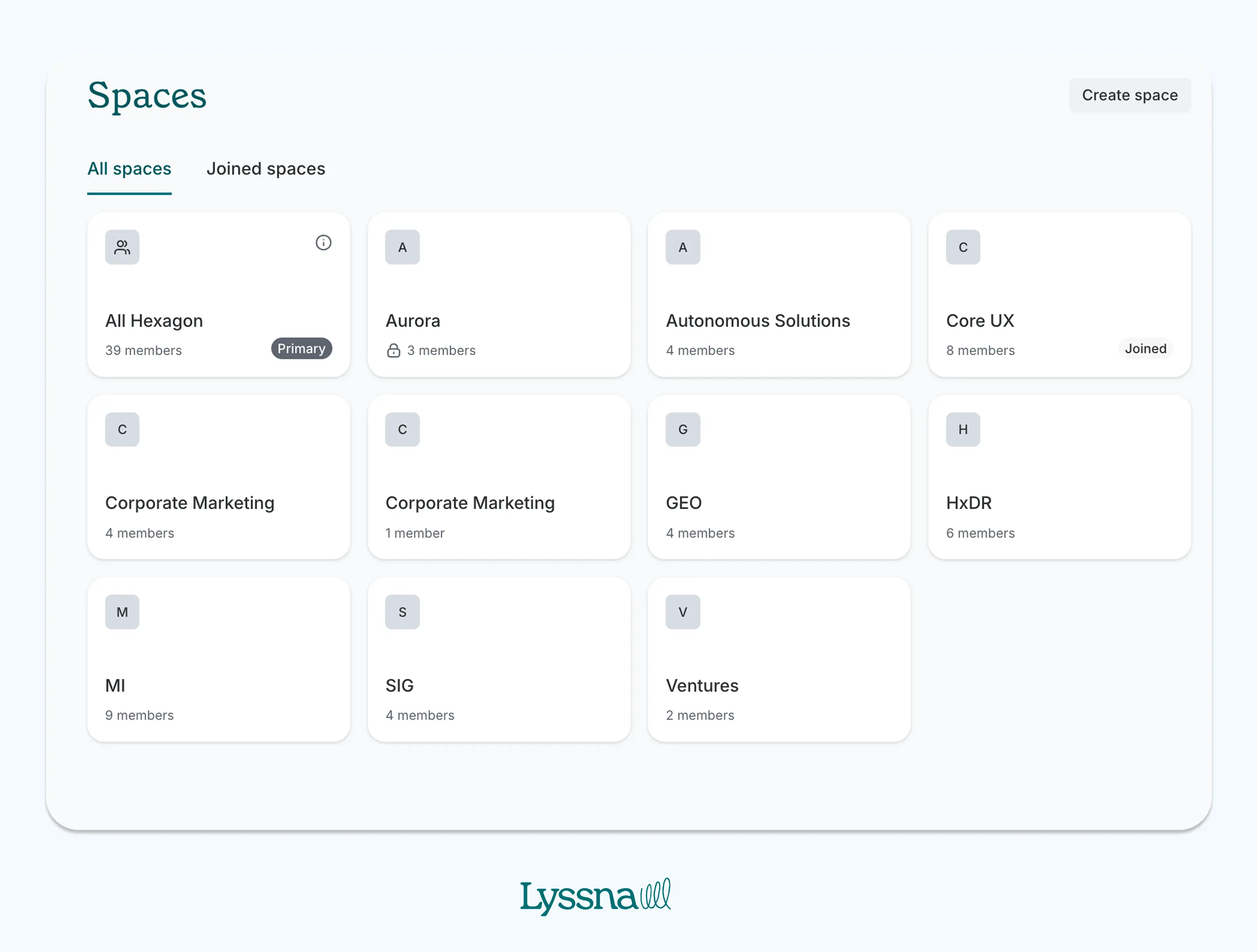
Perhaps the most significant shift was at the organizational level. Moving from siloed tools to a single enterprise platform connected teams that had previously operated in isolation.
“Now we have one place – all divisions using Lyssna. They communicate between each other. They share knowledge. Every team can have access to the other teams' user research."
Nikolay Nikolov
Senior UX/UI Designer
For Keirstin, that visibility opened up something new: “It really helps us see how other research teams in other divisions and business areas of Hexagon are approaching learning about their customers and the broad portfolio.”
As these connections grow, so do expectations around research. What was once occasional practice has become part of how teams work.
“One of the most important shifts is organizational. Research is now something teams expect to use, not something they occasionally try,” shares Nikolay.
Looking ahead
Hexagon’s future is moving toward increasingly connected, intelligent, and autonomous systems. As that complexity grows, the cost of unvalidated decisions grows with it.
For Nikolay, the case is clear: “As this complexity increases, validated decisions become even more important. Lyssna supports this continuous validation, which helps ensure innovation remains reliable and trustworthy.”
For Keirstin, it comes back to the workforce Hexagon is building for: “The industry is changing. A new workforce is coming in, and they have much different expectations of what software and technology should be able to do. Lyssna is giving us the ability to tap into that modern, incoming workforce and provide that perspective.”
For a company like Hexagon, that’s built its reputation on precision and trust, Lyssna isn’t just a tool for testing, but a foundation for validated decision-making at enterprise scale.
Research is no longer an optional step. It is how decisions move forward.