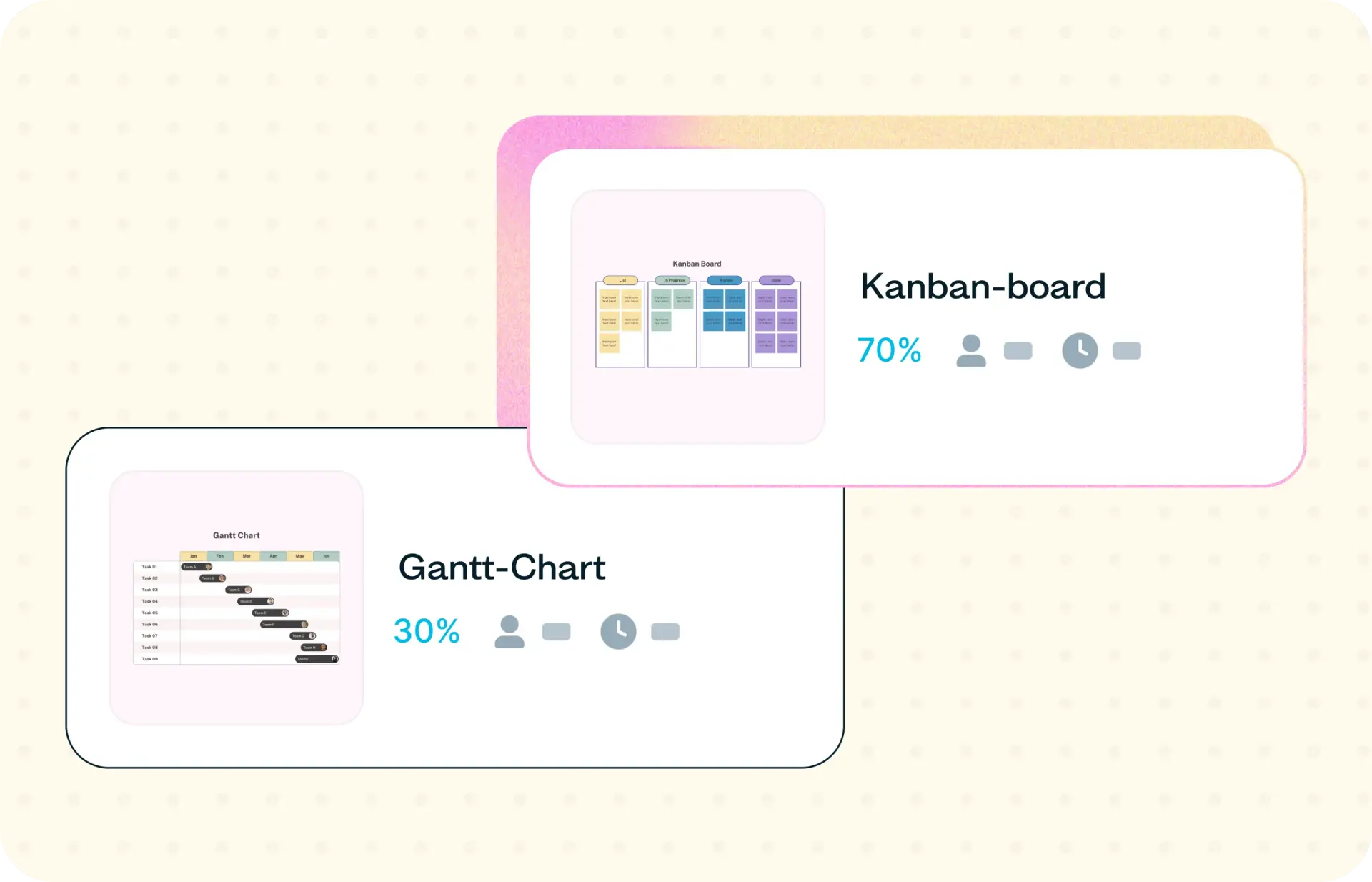

Feature preference testing puts two or more competing directions in front of real users and tells you which they prefer, and why. This template helps you set up a structured test so you can replace opinion-driven stalemates with evidence your whole team can align behind.
Test feature preferences before you build the wrong one
When competing feature concepts land on the table, the loudest or most senior voice in the room often picks the winner – not the one backed by evidence.
Launching the wrong variant leaves conversion, engagement, or revenue on the table. And fixing it after launch almost always costs more than testing would have upfront.
Low-fidelity mocks add bias too: people tend to prefer whichever option looks more finished, not whichever one actually solves the problem.
And a vote without rationale is still a guess – you know which option won, but not why, so nothing carries forward to your next decision.
Feature preference testing turns that debate into a shipped decision. Compare options with real users, capture the reasoning behind their choice, and you get evidence stakeholders can actually act on.

What this template helps you discover
This template gives you specific, actionable signal on how your users evaluate competing options:
Which option real users prefer, and by how much
The reasoning behind the preference, captured in verbatim follow-up responses
How preference shifts across personas, plans, or user tenure
Whether the winning option is a strong signal or a near-tie that calls for a different decision criterion
Where two options are functionally equivalent, so other factors like engineering cost or brand fit should guide the call
What you'll test
Feature preference testing can take a few different forms depending on the scope of your decision. This template supports the most common approaches:
Direct comparison
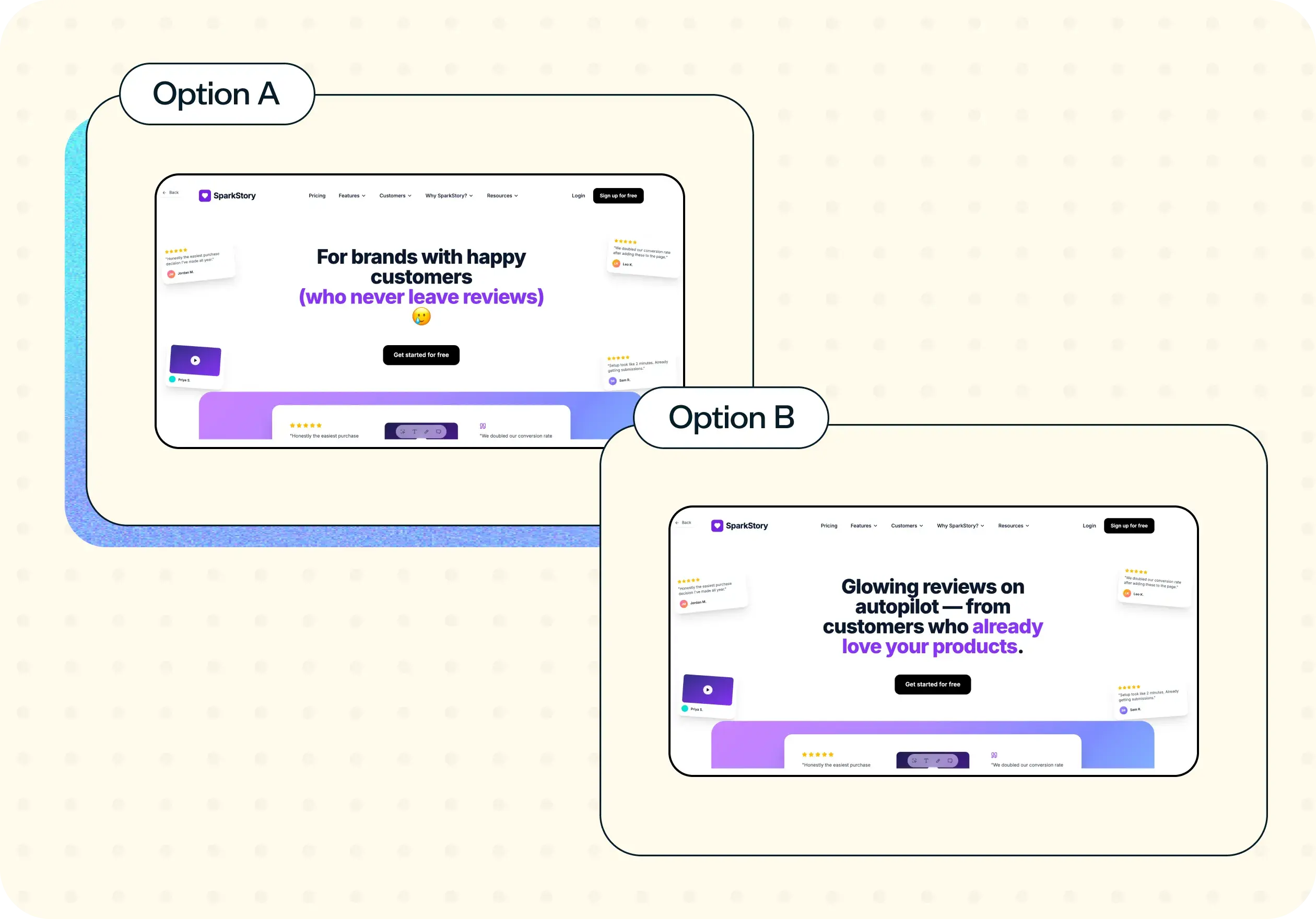
A direct comparison shows users two or more feature options side by side and asks which they prefer – you can test up to six options in a single comparison. For two-option comparisons, results include a statistical confidence score, so you know whether the preference is a real signal or could be down to chance. For larger sets, you can add a ranking or rating follow-up question to understand relative priority across all the options shown.
Rationale
The most useful preference tests go beyond "which one" to capture "why." Follow-up questions ask participants to explain their reasoning: whether their choice was driven by clarity, familiarity, brand fit, perceived usefulness, or something else entirely. Collecting rationale also lets you spot where reasons differ across segments, which can change how you interpret the overall result.
When to use this template
Feature preference testing fits naturally into several common decision points:
When two or more design directions are competing internally and the team can't align on a winner
When prioritizing features for the next quarter or release and you want user input on what matters most
When testing value proposition or messaging variants before a campaign launch
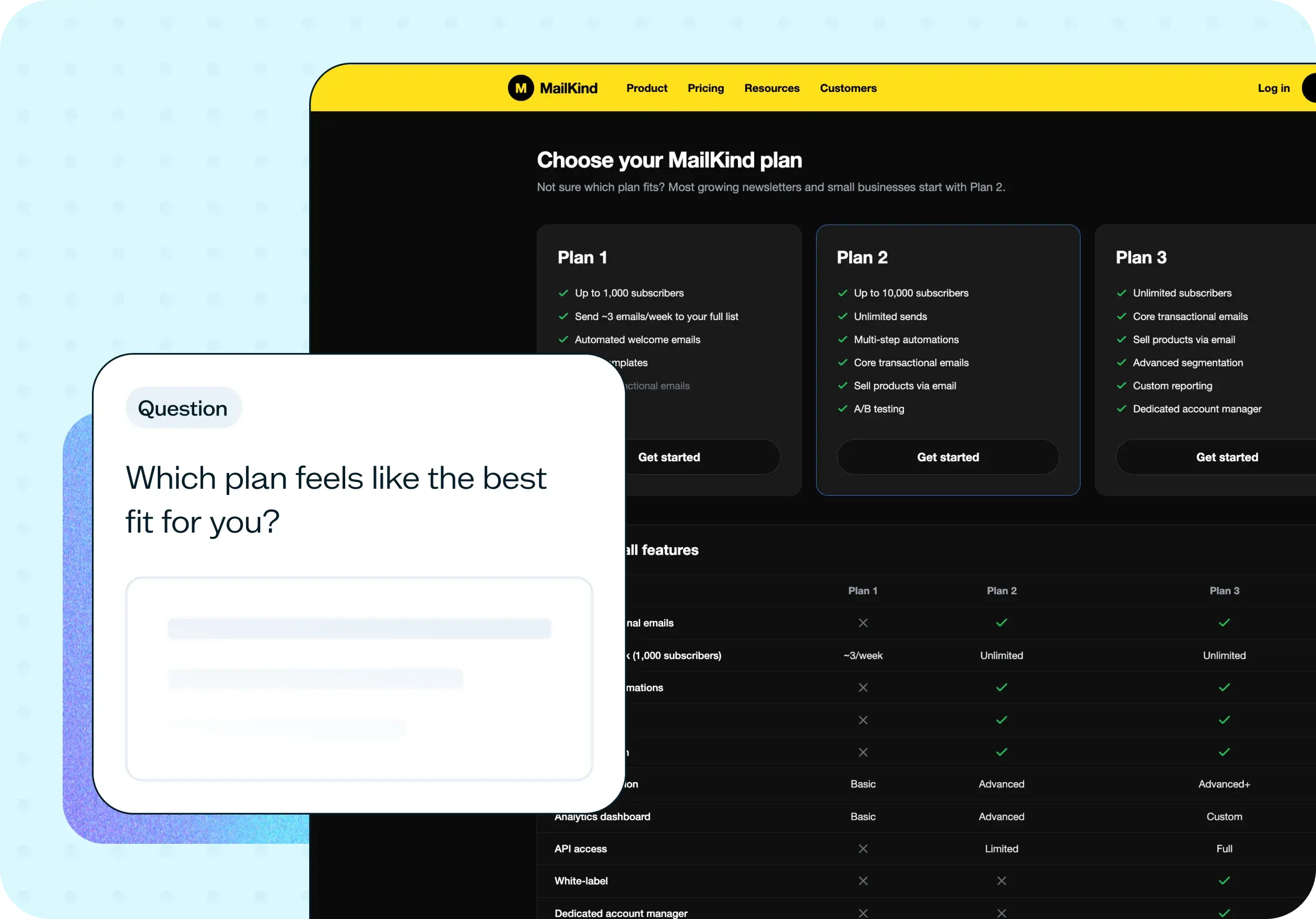
When deciding between pricing plan structures and you need to understand which resonates with your audience
When evaluating brand, hero, or visual design options
Before committing production effort to one direction – especially for high-cost-of-reversal decisions
How to use this template
Running a feature preference test with this template takes five steps:
Click "Use this template" and log in to your Lyssna account. If you don't have an account yet, you can start exploring with a free plan.
Customize the test to match your decision. Swap in your own design options, feature concepts, or messaging variants. Adjust the follow-up questions to capture the rationale that matters most for your specific context.
Define your audience and recruit participants. Choose whether to recruit from the Lyssna research panel or share the test link with your own users. If you're testing across segments, set up your targeting so you can compare results by persona, plan, or tenure.
Launch the test and collect responses. Set your test live and let participants evaluate your options at their own pace. Most preference tests return results within hours.
Analyze your results and share the evidence. Review the preference breakdown, read through participant rationale, and look for segment-level differences. Use the results to build a recommendation that combines user preference with business criteria, then share it with stakeholders.
Example outcomes
A well-run feature preference test gives you more than a winner. Here's what you can expect from your results:
A clear preferred option with a percentage breakdown that shows the strength of the signal
Verbatim rationale from participants you can reference in your writeup or stakeholder presentation
A decision recommendation that combines user preference with business criteria like engineering cost, strategic alignment, or brand fit
Shared evidence that aligns product, design, and stakeholder teams around a single direction
Who this template is for
This template is designed for anyone making feature or design decisions who wants evidence from real users:
Product managers prioritizing features or comparing variants for the roadmap
UX researchers running comparative studies to inform design direction
Designers deciding between creative directions before committing to final production
Marketing teams testing value proposition and messaging options before launch
Founders and leaders making high-cost-of-reversal product decisions where the wrong call is expensive to undo
FAQs about feature preference testing
You may also like these templates

Adopting Lyssna got us into the habit of asking our users questions before locking in decisions.

Ron Diorio
VP Business Development & Innovation, at The Economist