
This template is for:
Market research
Marketing
Surveys
Created by:

Lyssna
Overview
Measure how your target audience actually perceives your brand – from first impressions to emotional associations and competitive positioning. Use this template to uncover the gap between how your brand intends to show up and how it's experienced by real people.
Why brand perception matters more than brand intent
Your brand is not what you say it is – it's what your audience believes it is. The gap between how you intend your brand to be perceived and how it's actually experienced by your audience is one of the most expensive blind spots in marketing.
Teams that don't measure brand perception operate on assumptions. They invest in messaging, design, and campaigns built on internal beliefs about how the brand lands – without knowing whether those beliefs match reality. Meanwhile, competitors may be owning the very associations you're trying to build, and perception shifts go undetected until they've already affected decisions and loyalty.
Without structured research, you can't close the gap. You can't know whether your brand positioning is resonating, which attributes your audience associates with you, or how you compare in the minds of real buyers. This template gives you a structured way to measure all of it – so you can move from assumption to evidence.

This template will help you discover
Brand perception research reveals how your brand lives in your audience's mind – not just what they know about you, but what they feel, what they associate, and where you stand relative to competitors. This template surfaces:
How your target audience describes your brand in their own words
What emotional associations people have with your brand
How your brand compares to competitors in key perception areas
Which brand attributes are strongest and which need work
What your audience remembers – or forgets – about your brand
What you'll test
Brand awareness
Before you can understand perception, you need to know whether your brand even registers. This section of the template asks participants how they first encountered your brand and how frequently they engage – establishing a baseline of recognition before you explore what that recognition means to them.
Emotional associations
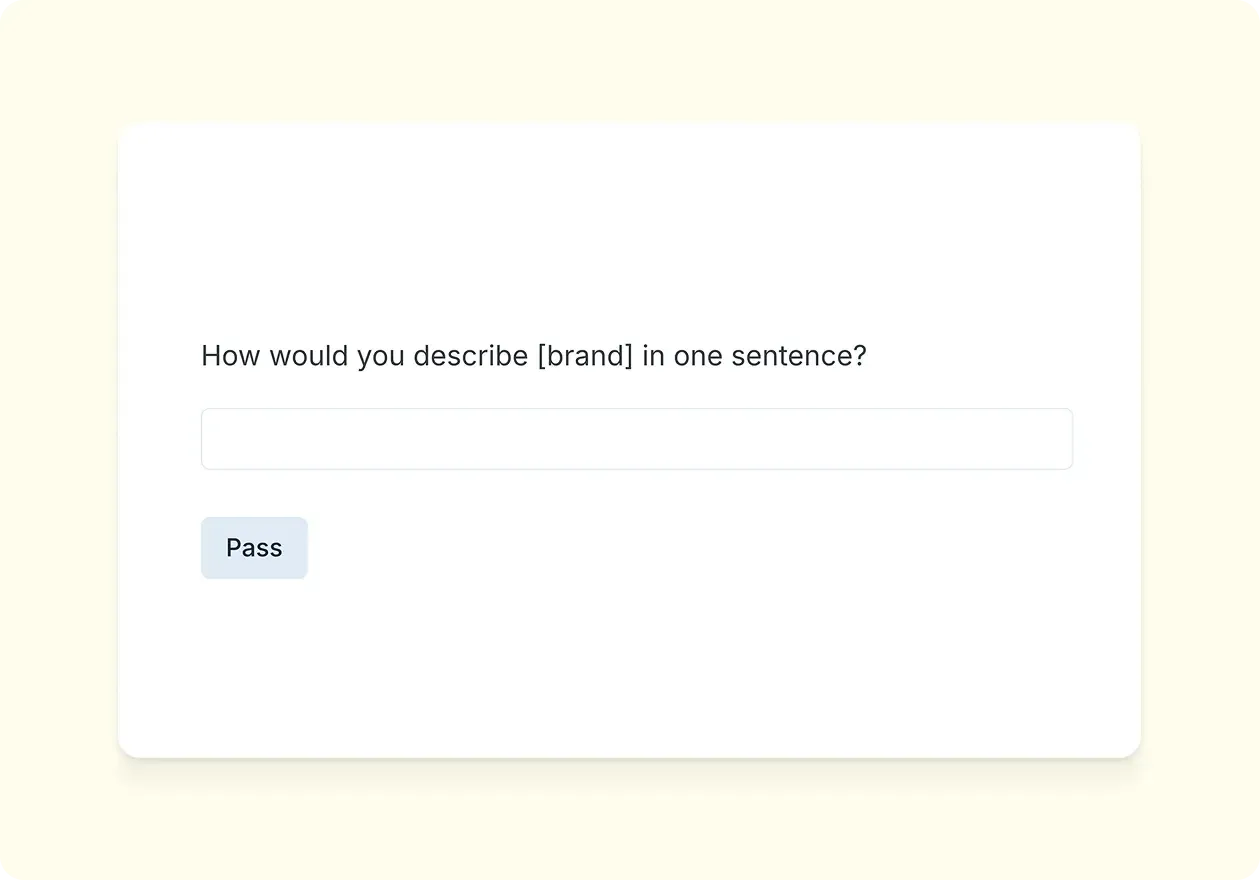
The survey template asks participants to describe your brand in their own words and select from a defined set of attributes. This reveals not just awareness but sentiment — whether your brand evokes the qualities you intend, and which associations are strongest or missing.
Competitive perception
Understanding brand perception in isolation isn't enough. This section asks participants how your brand compares to alternatives, which competitors they see as similar, and which attributes they'd assign to each. The result is a clear picture of where you stand – and where the opportunity is.
When to use this template
This template is useful at any point in the brand life cycle, but it's particularly valuable at the moments when perception gaps matter most:
Before a rebrand or brand refresh, to establish what you're working with
After a brand campaign, to measure whether it moved the needle
When entering a new market or audience segment
During annual brand health assessments
When competitors are gaining market share and you need to understand why
How to use this template
1. Set up your screener
The template includes screener questions to make sure you're targeting the right audience. Customize the screener to match your criteria – past purchase behavior, category familiarity, demographic profile, or any other variable relevant to your brand's target audience. Only participants who meet your criteria will continue to the survey.
2. Customize the survey questions
The template includes covering purchase frequency, brand discovery, category associations, perceived target audience, competitive comparisons, and open-ended brand descriptions. Adapt the wording to fit your brand and category. The goal is to capture both prompted and unprompted perception – what participants volunteer about your brand and how they respond when given a defined set of attributes.
3. Recruit your participants
Preview your test or save and continue to recruit participants. You can use Lyssna's research panel to reach your target audience, or share the test link with your own network.
Your results show how participants responded across each dimension – from the words they associate with your brand to how likely they are to recommend it. Use the data to map perception against intent, identify the attributes that are landing and those that aren't, and benchmark your competitive standing.
Example outcomes
Running a brand perception survey with this template gives you research you can act on:
A clear mapping of brand perception vs brand intent, grounded in real audience data
Identified perception gaps to address in messaging, positioning, and design
Competitive perception benchmarks you can track over time
Data to support brand strategy decisions with leadership and stakeholders
Stronger brand positioning informed by how your audience actually describes you
Who this template is for
This template is built for anyone responsible for understanding or strengthening brand positioning:
Brand managers measuring brand health and tracking perception over time
Marketing leaders assessing whether brand campaigns are shifting perception
Market researchers conducting structured brand studies
CMOs building data-driven brand strategies
Agency teams advising clients on brand perception and competitive positioning
Whether you're running a brand health check for the first time or tracking perception changes across multiple campaigns, this template gives you a consistent, repeatable process.
FAQs about brand perception research

You may also like these templates

The navigation test is god's gift to UI designers. It probably has the best power-to-simplicity ratio of any software, ever.

Nick Franklin
CEO at ChartMogul



Try for free today
Join over 320,000+ marketers, designers, researchers, and product leaders who use Lyssna to make data-driven decisions.
No credit card required