09 Jan 2026
|18 min
Unstructured interviews
Learn how to conduct unstructured interviews to uncover deep user insights. Discover when to use them, question examples, and analysis best practices.

Unstructured interviews are one of the most effective ways to uncover what users really think, feel, and need. While structured interviews are useful for validating assumptions and comparing responses, they often leave little room for discovery – and that's where the most valuable insights tend to live.
By allowing conversations to unfold naturally, unstructured interviews help teams surface motivations, pain points, and perspectives that rarely appear in scripted research. This flexibility makes them especially powerful during early discovery, when teams need to learn quickly, challenge assumptions, and follow insights as they develop.
In this guide, we break down how unstructured interviews work, when to use them, and how to run them well. By the end, you'll have a clear framework for starting an unstructured interview study that delivers deeper insights and more confident, user-centred product decisions.
Key takeaways
Unstructured interviews prioritize flexibility over fixed scripts. Unlike structured interviews, they rely on open-ended questions and organic conversation flow, allowing participants to share experiences in their own words and guide the discussion toward what matters most to them.
They're most powerful during early discovery. Unstructured interviews excel at uncovering the "why" behind user behaviors, revealing motivations, pain points, and unexpected insights that structured approaches often miss – making them ideal when you need to explore the problem space before validating specific hypotheses.
Rich insights come with trade-offs. While unstructured interviews provide deep, detailed understanding and build genuine empathy, they require more time to conduct and analyze, need skilled interviewers, and produce varied data that's harder to compare across participants.
Success depends on preparation and technique. Even without a rigid script, effective unstructured interviews require clear research goals, thoughtful participant recruitment, active listening skills, and systematic analysis using approaches like thematic coding to identify patterns and actionable insights.
They work best as part of a broader research program. Unstructured interviews complement other approaches – use them to explore and generate hypotheses, then validate findings with structured methods like surveys or usability testing. Lyssna helps you manage this entire research workflow in one place.
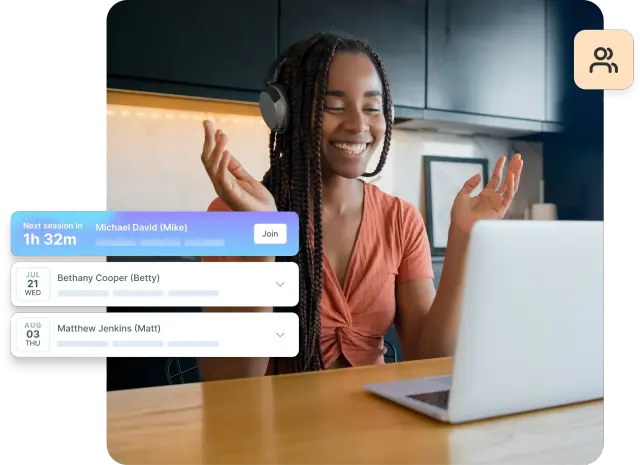
What is an unstructured interview?
An unstructured interview is a flexible, conversational research method that relies on open-ended questions rather than a fixed script. Instead of following a predetermined order, like in structured interviews, the interviewer adapts the conversation based on the participant’s responses and emerging themes.
The core principle is simple: create a comfortable environment where participants can share their experiences, thoughts, and feelings in their own words. This approach often reveals insights that structured interviews miss, because participants are free to focus on what matters most to them – not just what's been asked.
Key characteristics of unstructured interviews:
Flexible questioning: Questions emerge organically from the conversation.
Open-ended format: Participants can elaborate on topics they find important.
Conversational tone: Feels more like a natural discussion than formal questioning.
Emergent themes: New topics can arise that weren't initially considered.
Participant-led direction: The interviewee helps guide the conversation flow.
When to use unstructured interviews:
Since the strength of unstructured interviews is gathering new and deep information, the best time to conduct this type of exploratory research is as early as possible in the research process.
Unstructured interviews can help you better understand your users’ attitudes, behaviors, and preferences. They can set a foundation for future research and validate any ideas that develop through the unstructured interview stage.
In other words, if you're looking for descriptive data to help you develop a new hypothesis or refine an existing one, it's helpful to understand where unstructured interviews fit in the broader context of evaluative vs generative research.
Comparison of interview approaches:
Aspect | Structured Interviews | Unstructured Interviews |
|---|---|---|
Question format | Fixed, predetermined | Flexible, emergent |
Time required | Shorter, predictable | Longer, variable |
Data consistency | High standardization | Rich variation |
Unexpected insights | Limited discovery | High discovery potential |
Analysis complexity | Straightforward | More complex, interpretive |

Advantages of unstructured interviews
Unstructured interviews offer several compelling advantages that make them a powerful tool in your research toolkit.
Rich, detailed insights
The open-ended nature of unstructured interviews allows participants to share detailed stories and context that structured approaches often miss. When someone describes their experience navigating a website, they might reveal frustrations, workarounds, and emotional responses that wouldn't emerge from yes/no questions.
Flexibility to explore unexpected topics
One of the greatest strengths of unstructured interviews is their adaptability. If a participant mentions something unexpected that could be valuable for your research, you can explore it immediately rather than being constrained by a predetermined script.
Natural conversation flow
The conversational approach helps participants feel more comfortable and open. This relaxed environment often leads to more honest responses and deeper insights than formal questioning might produce.
Uncovering hidden motivations
Unstructured interviews excel at revealing the 'why' behind user behaviors. Through follow-up questions and natural conversation, you can understand the underlying motivations, fears, and desires that drive user decisions.
Building empathy and understanding
The storytelling nature of unstructured interviews helps teams develop genuine empathy for users. When you hear someone describe their struggles in their own words, it creates a more powerful connection than statistics alone.
Disadvantages of unstructured interviews
While unstructured interviews provide valuable insights, they also come with challenges that teams should understand before choosing this approach.
Time-intensive process
Unstructured interviews typically take longer to conduct, transcribe, and analyze than structured approaches. A single interview might last 60-90 minutes, and the analysis phase can be equally time-consuming as you work through rich, varied responses.
Inconsistent data collection
Since each interview follows a different path, you may not gather the same information from all participants. This can make it challenging to compare responses or identify patterns across your user base.
Requires skilled interviewers
Conducting effective unstructured interviews requires experience and skill. The interviewer must be able to ask good follow-up questions, manage the conversation flow, and create a comfortable environment for sharing.
Analysis complexity
The rich, varied data from unstructured interviews can be challenging to analyze systematically. Unlike structured data that fits neatly into categories, unstructured interview data requires careful interpretation and coding.
Potential for bias
The flexible nature of unstructured interviews can introduce interviewer bias. Different interviewers might pursue different topics or interpret responses differently, affecting the consistency of insights.
Limited statistical validity
If you need quantifiable data or statistical significance, unstructured interviews may not provide the standardized responses required for statistical analysis.
When structured approaches might be better:
You need quantifiable data for decision-making.
Time and resources are severely limited.
You're testing specific hypotheses.
Consistency across interviews is critical.
You have inexperienced interviewers.

Unstructured interview questions
Since you won't have a specific set of questions to work with in an unstructured user interview, you'll need to rely on the conversation and cues in your participants' responses to guide things – even if you have an idea of some questions you'd like to ask.
Beyond needing a skilled interviewer, the key to unstructured interviews is preparing some background information on the topic you're researching ahead of time. Prep some notes to bring along to the interview to help you develop questions relevant to your research question while keeping the participant's responses in mind.
While you won't follow a rigid script, having a toolkit of proven question types helps guide productive conversations.

Ask open-ended questions that encourage your participant to use a lengthy response — it might be difficult at first, but as the interview goes on, participants are likely to open up a bit more.
Starting questions
Begin with broad, comfortable questions that help participants ease into the conversation:
"Tell me about your experience with [topic/product/service]"
"Walk me through a typical day when you [relevant activity]"
"What comes to mind when you think about [subject area]?"
Start the interview with a question that's easy to answer to help the participant feel more comfortable.
Exploratory questions
These questions help you dig deeper into specific topics:
"Can you tell me more about that?"
"What was that experience like for you?"
"How did that make you feel?"
"What went through your mind when that happened?"
If you have trouble getting lengthy responses, use probing "how" and "why" questions to get them to elaborate more. Avoid questions they can answer with just a "yes" or "no."
Contextual questions
Understanding the broader context helps you interpret responses more accurately:
"What else was happening at that time?"
"Who else was involved in that situation?"
"What had you tried before that?"
Behavioral questions
Focus on actual behaviors rather than hypothetical scenarios:
"Tell me about the last time you [specific behavior]"
"What typically happens when you encounter [situation]?"
"How do you usually handle [challenge]?"
Emotional questions
Understanding emotional responses provides valuable context:
"How did that make you feel?"
"What was the most frustrating part of that experience?"
"What would have made that experience better?"
Question guidelines:
Avoid leading questions that suggest answers or push toward specific responses.
Use neutral language and keep questions free from bias or loaded terms.
Ask one thing at a time and avoid complex, multi-part questions.
Follow the participant's lead and let their responses guide your next questions.
Stay curious and approach each conversation with genuine interest in learning.

How to conduct an unstructured interview
There are four main steps to conducting an unstructured interview study: planning, recruiting participants, interviewing, and post-interview data analysis and report building.
Step 1: Planning
Before running any interviews, it’s important to clearly define the goal or objective of the research, only then will you be able to plan your study accordingly. This will shape every decision that follows, including who to recruit, what to explore, and how the interviews will be conducted.
Key planning considerations to think about:
Define the research goal or problem to be explored.
Decide the context and broad themes to guide the conversation.
Identify the type of participants to recruit.
Choose whether interviews will be conducted remotely or in person.
Set up a clear system for organising notes, recordings, and transcripts
Create folders for background research and interview notes.
Even though unstructured interviews are flexible, that doesn't mean they're disorganized. You'll need to stay vigilant about organizing your interviews and the data you generate to make sure you don't miss important information.
Step 2: Recruit participants
You may want to recruit participants from your existing user pool. If that's not possible, you can use your brand's ideal customer profile (ICP) to find matching participants from a research panel (like the one we offer at Lyssna, where you can recruit directly into a scheduled interview session).
When recruiting, consider:
Whether participants can be sourced from the existing user base.
Using research panels when existing users aren’t available.
Matching participants to the ideal customer profile.
The interview length and overall research budget.
Want to know how many user interviews you should do? Our article has all the important things to think about when making this decision for your UX research
Step 3: Conduct the interviews
Once participants are recruited, it's time to run the interviews.
Key steps during the interview process include:
Scheduling a mutually convenient time and, if in person, a suitable location.
Testing technology in advance for remote interviews.
Greeting participants and confirming consent to take part.
Explaining the purpose, structure, and expected length of the interview.
Starting with an easy, introductory question to break the ice.
Keeping notes accessible throughout the session.
Step 4: Post-interview analysis and reporting
After interviews are complete, the focus shifts to transcription, analysis, and sharing findings.
Post-interview tasks include:
Responding to any follow-up questions from participants.
Transcribing interviews for analysis.
Analysing and synthesizing qualitative data to identify key themes.
Compiling findings into a report for relevant research stakeholders.
If you're transcribing manually and you're a reasonably quick typer, try speeding up the interview by 25% to help you complete the task. Otherwise, if you upload your interviews to Lyssna (or use an integration for automatic uploading), you can get an accurate, automated transcript ready for analysis.

Interview best practices
Active listening techniques:
Paraphrase what you've heard to confirm understanding.
Ask clarifying questions when something is unclear.
Show genuine interest in participants' experiences.
Avoid interrupting or rushing responses.
Probing strategies:
Use the "5 whys" technique to understand root causes.
Ask for specific examples rather than general statements.
Explore both positive and negative experiences.
Understand the context surrounding key events.
Common pitfalls to avoid:
Don't ask leading questions that suggest desired answers.
Avoid making assumptions about what participants mean.
Don't rush to fill comfortable silences.
Resist the urge to solve problems during the interview.
Analyzing unstructured interviews
Unstructured interviews generate a ton of descriptive data, so thematic analysis is often the best method. Content analysis is another option, but that works best for existing content (e.g. feedback forms, website reviews, etc.)
To perform a thematic analysis, you'll need your transcripts and preferably software that will help you code them (you can code transcripts manually, but this adds time, and it would need someone with experience in qualitative coding).
To code your transcripts, you examine the text line by line and look for patterns, sentiments, common phrases, pain points, positive points, etc. Then, you 'tag' the text with a code.
Coding categories might include:
Pain points and frustrations
Positive experiences and successes
Behavioral patterns
Emotional responses
Workarounds and adaptations
Unmet needs and desires
It's best practice to examine your text at least twice, as some codes you add later might be relevant for earlier text.
Then, you group the texts by their codes and group codes by similarity. From there, determine if there's a common theme among them – these themes will be your findings.
If you prefer content analysis, another option is word clouds – a software feature that highlights words and phrases based on frequency.
Identifying actionable insights
From findings to insights:
Look for patterns that explain user behavior.
Identify root causes behind surface-level problems.
Connect themes to business goals and product decisions.
Distinguish between what users say and what they actually need.
Prioritizing insights:
Consider the frequency of themes across participants.
Evaluate the emotional intensity of responses.
Assess alignment with business objectives.
Identify insights that suggest clear action items.

Presenting unstructured interview findings
Effectively presenting unstructured interview findings transforms rich qualitative data into compelling, actionable insights that drive product decisions. The key is balancing the depth of your discoveries with clear, accessible communication.
Structuring your presentation
Recommended presentation structure:
Research objectives: Present the purpose of your research and any key highlights you found important.
Approach: Present your participant recruitment strategy, discuss the reason for choosing this approach, and your choice of analysis.
Findings: Discuss the themes from your data, highlighting samples to illustrate your points.
Discussion and recommendations: Do your findings help to achieve your research objectives? Based on what you've found, how would you recommend proceeding?
It's a good idea to save your presentation or report in a research repository, where you and other team members can refer to it in the future.
Making findings compelling
Use participant quotes strategically:
Select quotes that powerfully illustrate key themes.
Include enough context so quotes make sense.
Attribute quotes to participant personas or demographics when relevant.
Balance emotional impact with representative accuracy.
Create user journey narratives:
Tell the story of user experiences from start to finish.
Highlight pain points and moments of delight.
Show how different user types navigate similar challenges.
Connect individual experiences to broader patterns.
Visual presentation techniques:
Use journey maps to show user experiences over time.
Create persona profiles based on interview themes.
Develop empathy maps showing thoughts, feelings, and behaviors.
Include photos or artifacts from interviews when appropriate.
Connecting insights to action
Translate findings into recommendations:
Link each major theme to specific product implications.
Prioritize recommendations based on impact and feasibility.
Suggest concrete next steps for each insight.
Connect recommendations to business goals and metrics.
Create actionable deliverables:
Develop user personas based on interview insights.
Create journey maps highlighting key pain points.
Build empathy artifacts that help teams understand users.
Provide templates or frameworks for ongoing user research.
Sharing and storing insights
Ongoing communication:
Share key insights in team meetings and slack channels.
Create one-page summaries for quick reference.
Develop insight cards that teams can reference during design decisions.
Schedule follow-up sessions to discuss implications and next steps.
Check out our workshop below for more tips on how to effectively present your research findings to your stakeholders.
Gain rich feedback from user interviews
Unstructured interviews are just one powerful method in your user research toolkit. To maximize the value of your research program, consider how unstructured interviews complement other research methods, and how tools like Lyssna can streamline your entire research process.
Complementary research approaches:
Use surveys to quantify themes discovered in interviews.
Conduct usability testing to validate specific pain points.
Run card sorting exercises to understand mental models revealed in conversations.
Follow up with preference testing to validate design directions.
Building a comprehensive research program:
Start with unstructured interviews to explore the problem space.
Use structured methods to validate and quantify key findings.
Return to unstructured approaches when you need deeper understanding.
Create feedback loops between different research methods.
How Lyssna can help
Running unstructured interviews well is hard enough without having to coordinate four different tools just to get a session off the ground. Lyssna's User interviews feature brings the entire moderated research workflow into one place – so you can focus on the conversation, not the logistics.
With Lyssna, you can recruit participants directly from a panel of 690,000+ vetted respondents, screen them with video screeners before committing to a session, schedule via Google Calendar, and run interviews through a built-in Zoom integration – with recordings captured automatically.
Whether you're running your first unstructured interview or managing a rolling research program, Lyssna gives you the structure to stay organized without the overhead of stitching together separate tools for every step.
FAQs about unstructured interviews

Alexander Boswell
Technical writer
Alexander Boswell is a product-led content writer and researcher with a background in marketing strategy and consumer behaviour. When he’s not writing, he’s playing baseball and D&D.
You may also like these articles