
28 Nov 2025
|10 min
Scaling UX research
Research leaders from Indeed and ING Bank share how they manage coordination, budgets, and visibility challenges when scaling UX research across multiple teams.


Research leaders face a common challenge: as teams grow, keeping track of who's researching what, and how much they’re spending, becomes increasingly difficult. The tools and processes that work for small teams often break down at scale, forcing leaders to choose between coordination overhead and operational blind spots.
We spoke with research leaders Frances James, UX Research Director at Indeed, and Odette Jansen, Head of Research at ING and founder of UxrStudy.com, about how they manage research across multiple teams, plus the challenges they face as their practices scale.
Key takeaways
Research leaders need constant visibility into team activities, often requiring manual tracking systems.
Shared accounts create false economies – cost savings come with coordination costs, errors, and miscommunication.
Without visibility into team spending, research leaders can't plan budgets effectively or protect strategic investments.
Effective coordination requires infrastructure that connects research tracking to repositories and product workflows.
Research management systems must evolve as team structures change.
Tracking research projects across teams
Frances James manages two research teams at Indeed, each comprising both researchers and research operations professionals. Her approach to tracking work is straightforward: separate Google Sheets for each team, containing information about collaborators, methods, dates, delivery targets, and links to research artifacts and Jira tickets.
But here's what caught our attention about her system: "I have those two spreadsheets, one for each team, open in tabs all the time," Frances explains. "They're there so that I can just jump in quickly and easily answer questions for anybody that might come up about what my team's working on."
The need for instant visibility is so critical that Frances keeps these spreadsheets permanently open. It's a practical solution that works, but it also highlights the constant attention research coordination requires at scale.
The hidden costs of shared accounts
For many research teams, budget constraints drive the decision to share a single account across multiple teams. It's a tempting cost-saving measure, but Odette Jansen has experienced firsthand how this creates its own set of problems.
"What problems come up when multiple teams share the same research account is that while you may be able to manage multiple projects at the same time, you can’t do them in real time, at the same time as the people on your team," Odette explains. "And at the same time, it becomes hard to see who's responsible for what, who has done the latest edits, or who is working on something currently."
She's direct about the tradeoff: "While it's cheaper, which is often nice for your budget, it does mean that you are more prone to errors and miscommunication, because it's impossible to keep track of who, what, where."
That phrase captures a real challenge: when multiple teams share infrastructure, basic coordination questions become surprisingly difficult to answer. Who's working on what? What stage is each project in? Where can I find the latest version?
Managing research budgets
Beyond coordination, research leaders face another complex challenge: managing budgets across central research teams and other teams across the organization.
Odette describes a situation many research leaders navigate: "You have a central research team, where you have all your ops, your governance, and everything in order, so you have a budget there. And then on top of that, you have product teams that want to perform research or use you to perform research, but they also have their own budgets."
The real difficulty isn't just tracking multiple budgets, it's the strategic planning problem this creates. As Odette puts it: "The biggest headache for me is managing your internal budget, which you know is sacred because it has to last a year. And then also making sure that you manage the budgets that the product teams have."
Without visibility into how product teams spend on research, central research teams struggle to protect their strategic budget and plan for capability building. Every research project becomes a negotiation: "So it's about finding this split of, okay, how much are you putting in versus how much are we putting in to make sure that our budget lasts throughout the year and we get to achieve the goals that we have."
Building infrastructure for coordination
Both Frances and Odette emphasize that effective research coordination doesn't happen by accident. It requires intentional infrastructure.
Odette describes how research projects naturally involve parallel work: "You can track all your research projects in almost an agile way by splitting them up into smaller tasks, because a research project or research track contains multiple parts. So while you're doing analysis on one research project, you may be setting up another one."
But this agile approach requires specific infrastructure: "And so having a good tracking board of that process that is linked to your repository, and that is linked to what the product teams are doing, is the best way for me to keep track of who's doing what."
Research management can't exist in isolation. It needs to connect to where research artifacts live and to the product development workflows that research informs.
The role of research operations
Frances credits much of her team's coordination success to research operations. "Research ops has really helped us a lot in figuring out how best to track who is working on what on the teams," she notes.
But even with dedicated research ops support, systems need to evolve. Frances describes how her approach has "adapted over time as things have changed and shifted as far as the team structure and dynamic."
The need for evolution is constant. As teams grow, restructure, and adapt to new organizational needs, research management systems must keep pace.
What works at enterprise scale
Here's something interesting: at Indeed, an enterprise company with sophisticated technology infrastructure, Frances describes their research tracking approach as using "a pretty simple spreadsheet format in Google Sheets."
Simple tools can be effective at scale. The tradeoff is that simplicity requires ongoing attention – keeping spreadsheets accessible, manually updating information across systems, and maintaining vigilance to ensure nothing falls through the cracks.
What research leaders need
The patterns across these conversations reveal what research leaders need as their practices scale:
Visibility without constant tracking. Research leaders need to answer coordination questions quickly, but they shouldn't need spreadsheets open 24/7 to do it.
Team structure that enables collaboration. When multiple teams share research infrastructure, clear boundaries and ownership become essential.
Budget visibility and control. Research leaders can't protect strategic budgets or plan effectively when they can't see or manage how different teams spend on research.
Infrastructure that connects. Research tracking needs to link to research repositories and product development workflows. Isolated systems create coordination overhead rather than reducing it.
Systems that evolve. As Frances's experience shows, research management systems must adapt as team structures and organizational needs change.
Solutions for scaling UX research
The coordination challenges research leaders face aren't new, but they become more acute as research practices scale. The spreadsheets, tracking boards, and manual processes that research leaders rely on today work because of sustained attention and effort, not because they elegantly solve the underlying coordination problems.
Research teams have become increasingly sophisticated in their methods and practices. The infrastructure supporting research operations deserves the same level of thoughtful design that researchers bring to understanding user needs.
As research becomes more embedded in product development, the question isn't whether coordination is difficult at scale – we know it is. The question is: what would research infrastructure look like if it was designed specifically for how research teams actually work?
Research leaders shouldn't have to choose between budget control and team clarity, or between visibility and coordination overhead. They shouldn't need to keep spreadsheets open or negotiate budget splits for every project. And they certainly shouldn't have to accept that tracking "who, what, where" is simply impossible.
Organizing research for how teams actually work
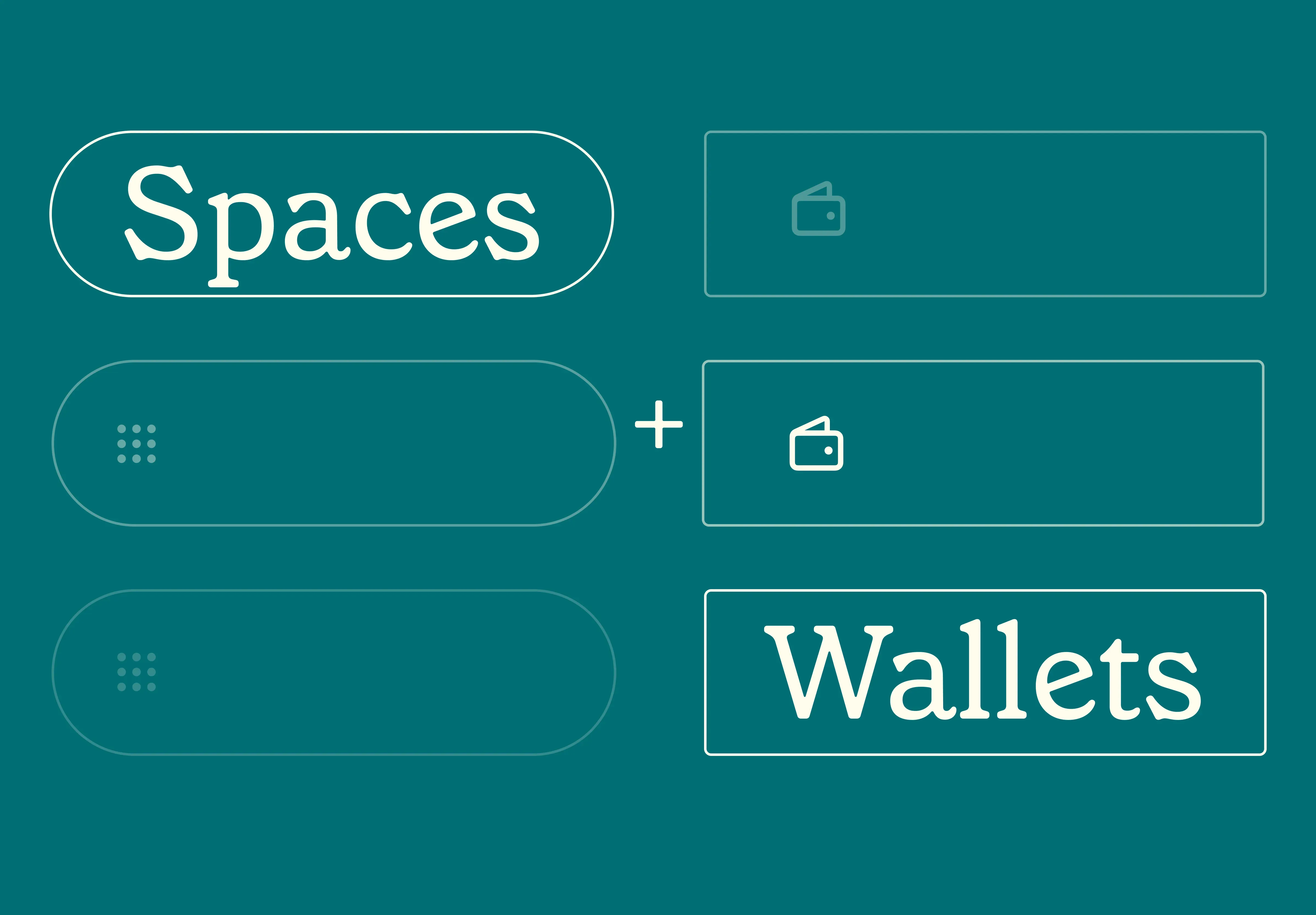
We've been listening to these challenges from research leaders and built Spaces and Wallets to help address some of them.
Spaces let you organize research by team, department, project, or client – with clear ownership and flexible visibility controls. Each team gets their own organized workspace while maintaining connection to the broader research practice.
Wallets give you budget visibility and control across teams using Lyssna as a shared tool. Allocate budgets to specific teams or projects, track spending with clear transaction history, and let teams work autonomously without constant approval requests. You maintain oversight while teams get the autonomy they need.
Together, Spaces and Wallets provide the infrastructure that coordination requires: structure that mirrors how your teams work, visibility into both research activities and spending, and systems that evolve as your needs change.
Learn more about Spaces and Wallets and how they can help your research practice scale.
You may also like these articles





Try for free today
Join over 320,000+ marketers, designers, researchers, and product leaders who use Lyssna to make data-driven decisions.
No credit card required