
This template is for:
Product development
Product
Card sorting
Closed card sorting
Created by:

Lyssna
Knowing how to prioritize high-impact product features and user needs is one of the most valuable skills a product team can develop — and one of the hardest to get right. Most teams aren't short on ideas. What's difficult is figuring out which ones will actually make a meaningful difference for users, and making that case convincingly to stakeholders.
Building the wrong thing wastes time, money, and user trust. When teams rely on gut feel or internal seniority rather than real evidence, the cost compounds quickly. Development effort gets spent on features users don't need, stakeholders lose confidence in the roadmap, and users quietly churn when their actual needs go unaddressed.
This template gives you a structured research approach to cut through that noise. Instead of guessing or debating endlessly, you'll surface what users actually value – so you can move forward with confidence and build the things that genuinely make a difference.

The problem with traditional prioritization
Most teams know their current approach to prioritization has gaps. Here's where things tend to go wrong.
Opinion-driven roadmap decisions. Without user evidence, roadmap calls default to whoever speaks most confidently in the room. Strong opinions carry more weight than they should, and the user's voice is missing from the conversation.
HIPPO bias (Highest Paid Person's Opinion). The higher someone's seniority, the more their preferences shape the roadmap – even when those preferences don't reflect how real users think or behave. It's a common trap, and it's expensive.
Feature overload. When teams try to build everything, they end up delivering nothing particularly well. A long list of half-baked features rarely beats a focused set of things that genuinely work for users.
Misalignment between team assumptions and real user needs. What your team believes users want and what users actually need are often two different things. The gap between those assumptions and reality is where roadmaps go off track.
What this template helps you discover
Running this study gives you the clarity to move from a crowded backlog to a confident, focused direction.
Which features users consider essential vs optional. Not everything on your list matters equally to users. This template helps you separate the must-haves from the nice-to-haves, based on real evidence rather than internal assumption.
What drives confidence, clarity, and action. You'll uncover the specific features and improvements that make users feel ready to succeed – and the ones that don't meaningfully change how they experience your product.
Which ideas don't actually influence user behavior. Some features feel important on paper but have little impact on what users do or how they feel. Identifying these early saves development time and stakeholder goodwill.
Where real impact comes from. You'll see which improvements connect most directly to users reaching their goals – and which ones are unlikely to move the needle.
How to move from a long backlog to a focused product roadmap. Whether you're facing 10 competing priorities or 100, this template gives you a structured way to narrow the field and align your team around a clear direction forward.
What you'll test
This template is built around three core areas of inquiry. Together, they give you a complete picture of what users value, why they value it, and what they're willing to sacrifice when they can't have everything.
Priority
Essential vs nice-to-have. Users rank and sort features to reveal which ones they consider non-negotiable versus genuinely optional – cutting through internal assumptions about what matters most.
Needs
What users need to succeed. Follow-up questions uncover the underlying needs, motivations, and blockers that drive user behavior, giving you context beyond the rankings alone.
Trade-offs
What users sacrifice when forced to choose. When users can't have everything, what do they prioritize? Forced trade-off tasks reveal true feature importance in a way that open-ended questions simply can't.
How the research works
This template combines three complementary research methods to give you a complete picture of what users actually value.
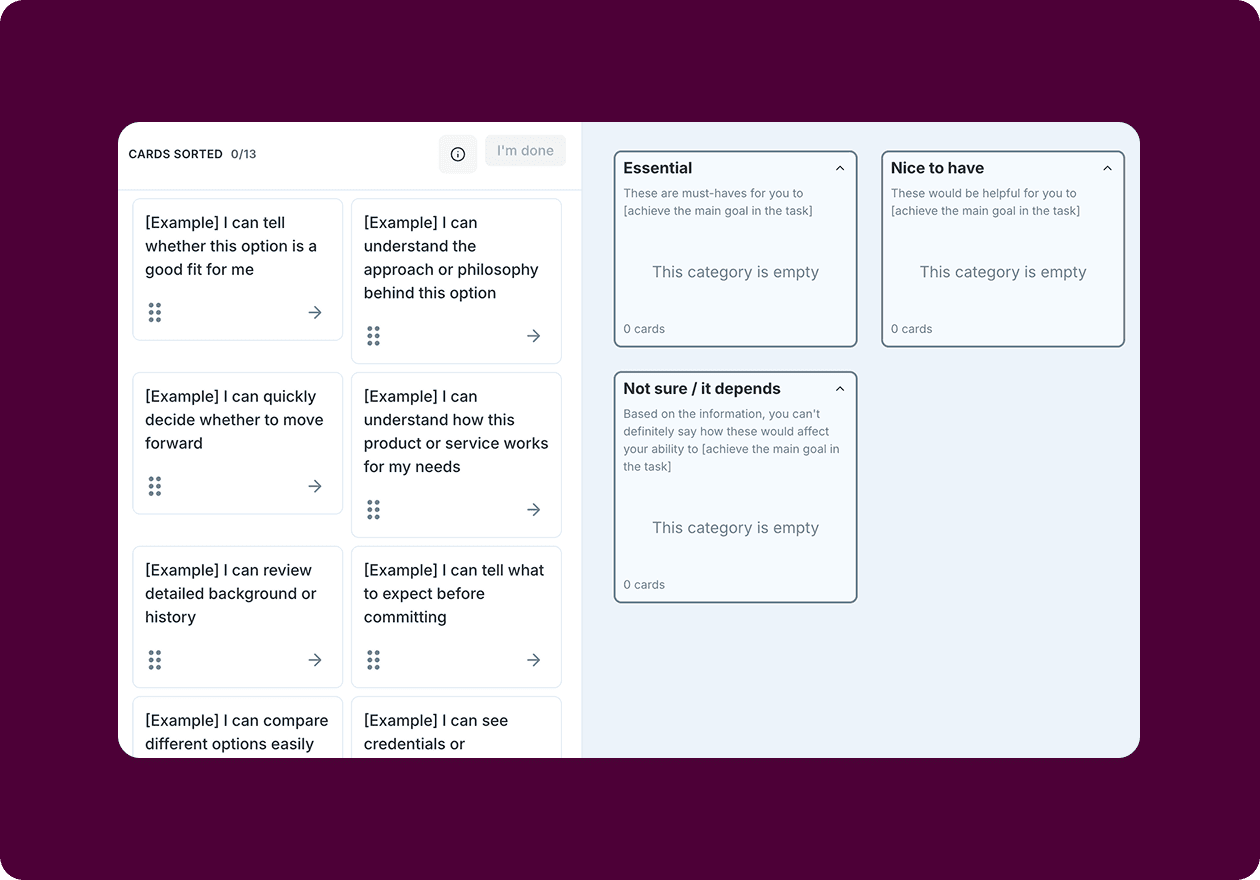
Closed card sorting puts your features directly in users' hands. By asking users to sort a set of cards representing different features or improvements into buckets – essential, nice to have, or not important – you force prioritization in a way that mirrors real-world decision-making.
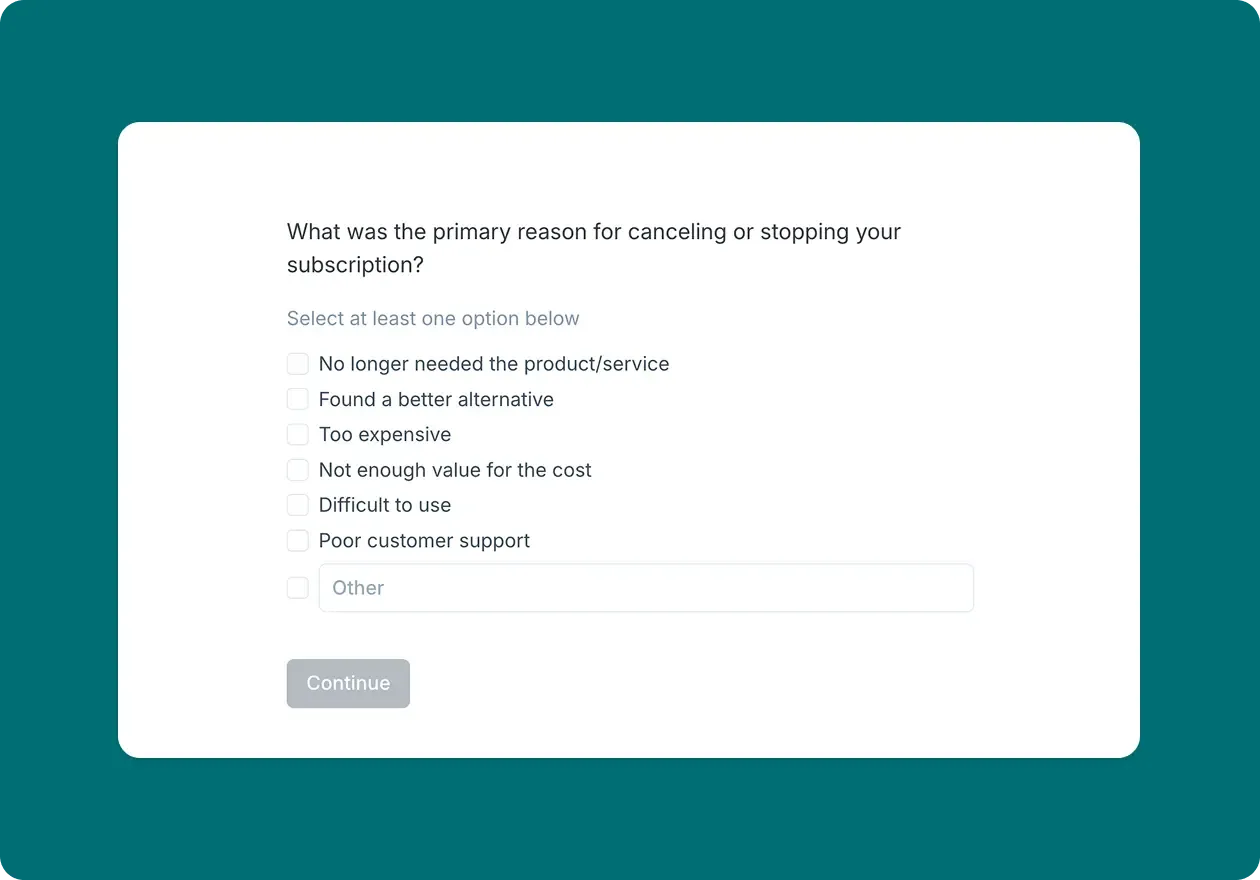
Follow-up questions add the "why" behind the rankings. After users sort and prioritize, targeted questions help you understand their reasoning, surface blind spots you hadn't considered, and sharpen the signal from the sorting task. This is where the most actionable insights tend to emerge.
Top-item selection identifies clear winners when trade-offs exist. By asking users to choose their most important items from a shortlist, you surface the features with undeniable priority – the ones your team can rally around with confidence.
Together, these three methods give you quantitative prioritization data and qualitative context to explain it.
How to use this template
The best way to see this template in action is to watch it being applied to a real product challenge. In the video below, we walk through a working example using TutorMatch – a marketplace that helps parents find and book academic tutors. The team's challenge: parents were browsing tutor profiles but not booking, and they had a long list of potential features to improve that conversion rate.
The walkthrough covers how to set up your card sort, write screener questions, recruit participants using the Lyssna panel, and interpret your results – including how to identify which features belong at the top of your roadmap and which ones can safely wait. Whether you follow along step by step or watch first and then adapt the template to your own product, you'll come away with a clear process for turning a long list of ideas into a confident direction forward.
When to use this template
This template works well in a range of situations – whether you're just starting to think about your next cycle or you're in the middle of a heated internal debate.
It's especially useful when you're working through a large backlog of ideas and need a principled way to decide where to focus first. It's also a natural fit for roadmap planning sessions, where teams need shared evidence to align around priorities rather than relying on whoever argues loudest.
Run this study before building new features to validate that what you're planning actually matters to users before investing development time. It's equally valuable when priorities are being debated internally – giving your team external evidence to cut through the noise.
This template is also well-suited for teams focusing on improving key metrics like conversion, engagement, activation, or retention, where understanding which features drive user success is critical to knowing where to invest next.
Who this template is for
Whether you're managing a product roadmap or trying to align a cross-functional team, this template gives you the evidence you need to move forward with confidence.
Product managers use it to prioritize roadmap decisions with real user data, reducing reliance on gut feel and making it easier to get stakeholder buy-in for what comes next.
UX researchers use it to validate which features and improvements genuinely matter to users – and to translate those findings into insights that drive product decisions.
Designers use it to align UX improvements with actual user needs, ensuring the work they're doing connects to outcomes users care about.
Growth teams use it to focus their efforts on the features and changes most likely to move the metrics that matter – rather than spreading effort across a long list of competing ideas.
FAQs about prioritizing product features

You may also like these templates


The navigation test is god's gift to UI designers. It probably has the best power-to-simplicity ratio of any software, ever.

Nick Franklin
CEO at ChartMogul



Try for free today
Join over 320,000+ marketers, designers, researchers, and product leaders who use Lyssna to make data-driven decisions.
No credit card required