09 Jul 2026
|19 min
Card sorting tools
Compare 11 card sorting tools, including free card sorting software. Explore open, closed, and online card sorting options, features, and pricing for UX teams.

A well-organized website starts with understanding how your users think. Card sorting – a fundamental UX research technique – helps you get there by asking participants to categorize and organize a list of items into groups that make sense to them.
By observing how users naturally group and arrange information, you can gain valuable insights into their mental models and preferences. These insights can then be used to inform your website’s information architecture, resulting in a more intuitive and user-friendly design.
Whether you're designing intuitive navigation, validating an information architecture, or restructuring content, you'll find a tool here that fits your workflow and budget. If you’re looking for a helpful card sorting example to see how these tools are used in real scenarios, this guide is a great place to start.
Want to learn more about the card sorting method before choosing a tool? Our detailed card sorting guide covers everything from planning to analysis.
Key takeaways
Method: Use open card sorting to discover mental models and closed card sorting to validate existing information architectures.
Budget options: Tools like kardSort and xSort provide free, no-frills alternatives for basic testing needs.
Participant scaling: For statistically significant quantitative data, aim for 30+ participants; for qualitative insights, 15–20 is sufficient.
Remote advantage: Remote unmoderated testing is the most efficient way to gather diverse user data across different time zones.
Finding the right fit: If you want integrated recruitment and multiple research methods alongside card sorting, Lyssna is worth starting with.
What is a card sorting tool?
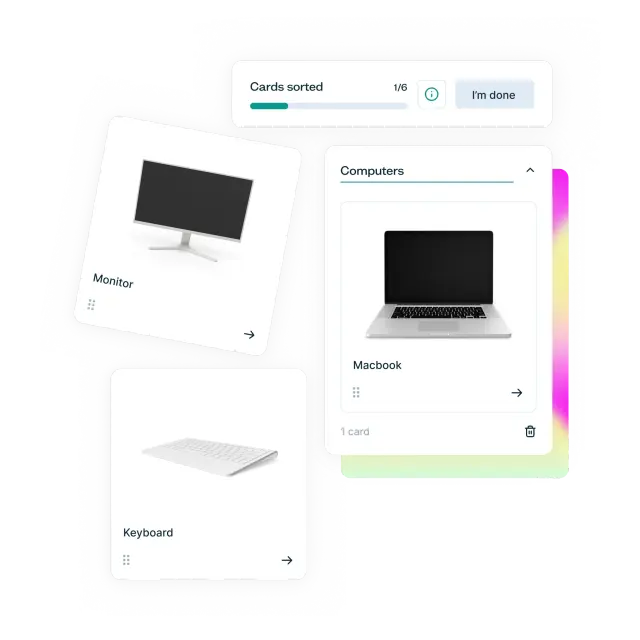
A card sorting tool is software that lets you run and analyze card sorting studies online, rather than with physical index cards. Most combine a participant-facing sorting interface with built-in analysis features like similarity matrices, so you can move from raw responses to clear patterns without manual tallying.
The 11 best card sorting tools compared
Note: all prices below are listed in USD unless otherwise stated, and reflect published self-serve pricing as of July 2026. Some tools price in other currencies or require a sales conversation for pricing – this is noted where relevant.
Product | Key features | Price |
|---|---|---|
Lyssna | • Choose from open, closed, and hybrid card sorting • Simple test setup • Customizable card sorting features, e.g. randomize how cards and categories are displayed, ask follow-up questions, etc. • View quick insights with agreement and similarity matrices • Easy collaboration with team members and stakeholders • Recruit from the Lyssna's research panel or via your own network | • Free plan offered • Paid plans start at $166/month |
UXtweak | • Choose from open, closed, and hybrid card sorting • PDF reports • Enter or import cards and categories | • Free plan offered • Paid plans start at €92/month |
UserZoom (UserTesting) | • Flexible testing options, with open and closed card sorting • Self-guided training | • Pricing unavailable |
Optimal Workshop | • Data visualizations • Concurrent testing • Exportable reports | • Paid plans start at $199/month |
UX Metrics | • Choose from open, closed, and hybrid card sorting • Observe and sort participant responses on a granular level • In-depth analysis • Flexible testing | • Free plan offered • Paid plans start at $49/seat/month |
Maze | • Intuitive card creation • Flexible card sorting options, e.g. randomize how cards are displayed, show a subset of cards • Analysis tools | • Free plan offered • Paid plans start at $99/month (with card sorting available on Enterprise plans) |
Userlytics | • Choose from closed, open, and hybrid card sorting • Record moderated card sorting sessions • Advanced analytics, including AI recommendations | • Paid plans start at $34/session (Enterprise) or $699/month (Self-Recruitment) |
Card Sorts by UserBit | • Open, closed, and hybrid card sorting • Real-time analysis • Client-ready sharing | • Free plan offered • Paid plan $15/month |
UXArmy | • Choose from open, closed, and hybrid card sorting • Built-in screener questions • Shuffle cards to decrease bias | • Free plan offered • Starter plan from $25/month |
kardSort | • Choose from open, closed, and hybrid card sorting • Built-in analytics • Exportable results | • Free plan offered • Starter from €11 (one month of access) • Premium from €25 (one year of access) |
xSort | • Visual interface • Flexible card sorting capability | • Free to download |
1. Lyssna
Lyssna is an all-in-one user research platform with a fully featured card sorting tool built in alongside prototype testing, five second testing, surveys, preference tests, and more.
Its card sorting feature allows you to choose from open, closed, and hybrid card sorting methods, with easy setup, recruitment, and results analysis. The testing interface is responsive and supports card sorting tasks on both desktop and mobile devices, with a smooth drag-and-drop UI, and accessible buttons for sorting without drag and drop too.
There’s also multi-language support, which means you can test with participants worldwide.
Key features
Open, closed, and hybrid card sorting: Choose from open, closed, and hybrid card sorting tests depending on your requirements. For closed card sorting, you create predefined categories for participants to sort cards into; for open card sorting, participants sort cards into categories they label themselves; and for hybrid card sorting, participants can sort into your predefined categories while also creating their own."
Simple setup: Create cards by either manually entering the names for each card, copying and pasting a list of names from another document into the test builder to create cards in bulk, or dragging and dropping a group of image files to create image cards in bulk.
Customizable card sorting features: Allow test participants to sort all, or only some, cards; limit the number of cards shown to participants (e.g. ask participants to categorize only 20 out of a total of 50 cards) to avoid participants getting overwhelmed if there are lots of cards to sort; randomize how cards and categories are displayed; and ask your participants follow-up questions.
Quick insights: Lyssna helps you analyze the results with agreement and similarity matrices, questionnaire responses, advanced filtering, and other analytics that help you identify the best ways to structure your information.
Collaborative experience: Download a CSV file, share your results via a link, and comment on the test builder and results pages to ensure your team and stakeholders are all on the same page.
Easy participant recruitment: With Lyssna, you can recruit directly from an integrated research panel of 690,000+ vetted participants – with precise targeting by geography, job role, industry, and more. Many studies return results within hours, which means you're not waiting days to move forward. You can input your study size, type, and audience on the research panel calculator to get an estimate of the cost and turnaround time. If you already have a dependable group of test participants, then you can also choose the self-recruitment option.
Easy screening: Need to target a specific group? Ask screener questions to get the right people for your research.
Recordings: Record audio, screen, webcam, or a combo of all three to capture users’ think-aloud moments during unmoderated card sort tests.
Plans and pricing
Free plan: Includes three seats and access to research methods such as card sorting, tree testing, navigation testing, and more.
Growth: Starting at $166/month (paid annually). Includes everything in the Free plan, plus five seats, in-depth studies, AI-generated summaries, and live website testing.
Enterprise plan: Pricing is tailored to your company and includes everything on the Growth plan, plus unlimited collaborators, security audits, and additional security integration.
Panel responses are pay-as-you-go for all plans.
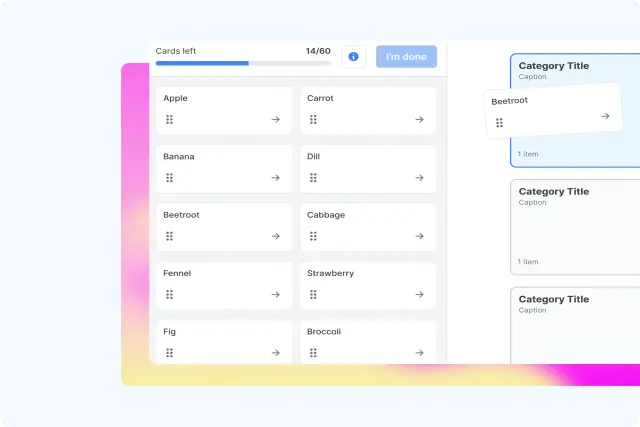
2. UXtweak
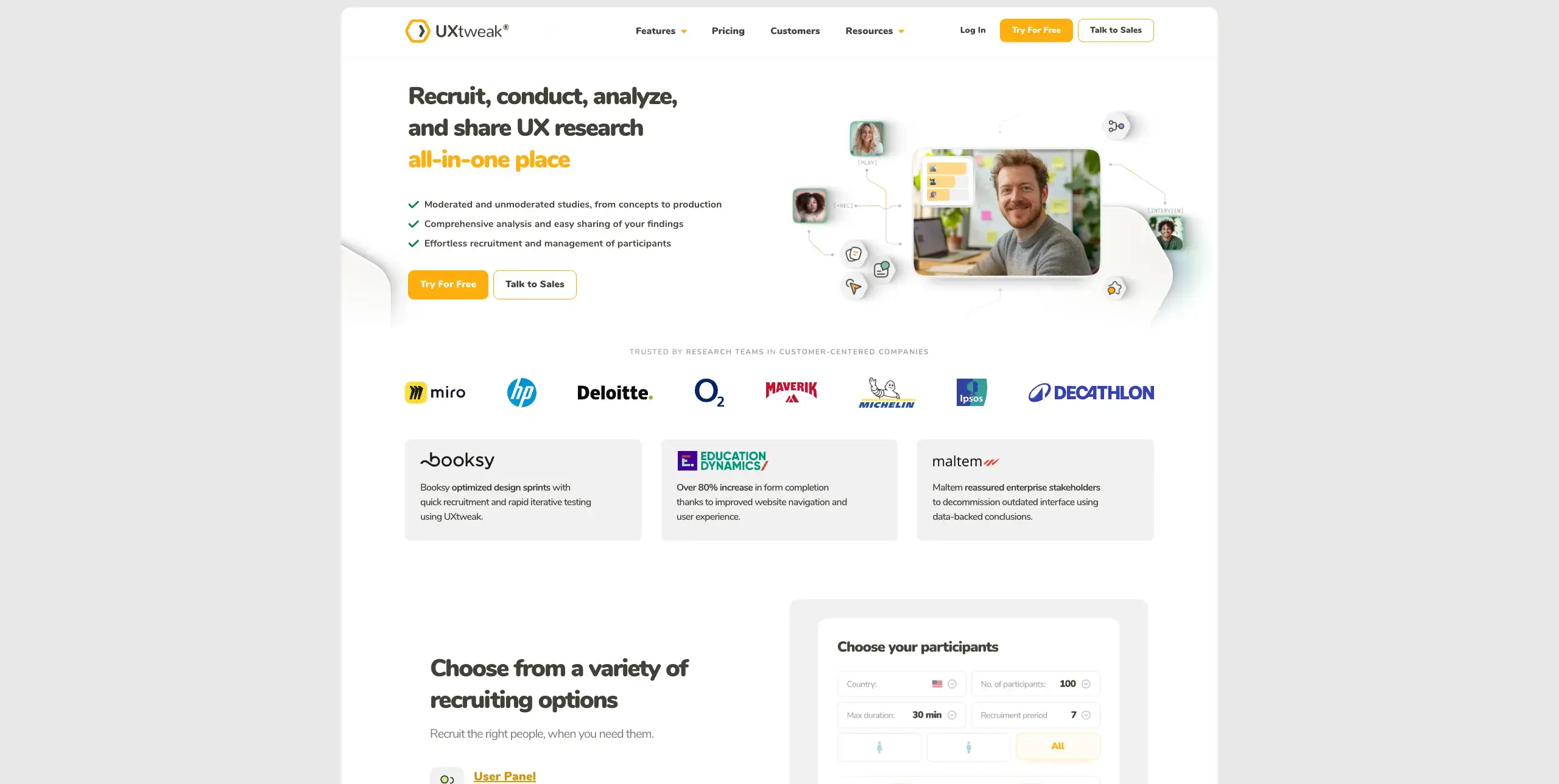
UXtweak simplifies the card sorting process with an easy-to-navigate UI and a quick timeline from start to finish.
Key features
Open, closed, and hybrid card sorting: Let your test participants create their own categories with open card sorting, provide predefined categories with closed card sorting, or take a hybrid approach.
PDF reports: Gather results and generate a PDF that’s easy to share with teammates and stakeholders.
Enter or import cards and categories: Create cards and categories in the test editor or import a card and category list from a CSV file.
Plans and pricing
Free: Gives you 15 responses per month and 1 concurrent active study, with results viewable for 14 days.
Business: From €92/month (billed annually). Includes access to the UXtweak User Panel, 50 responses per license per month (upgradable), and unlimited tasks per study.
Custom: Tailored to larger organizations, with unlimited concurrent studies, custom data retention, SSO, and dedicated support.
3. UserZoom (UserTesting)
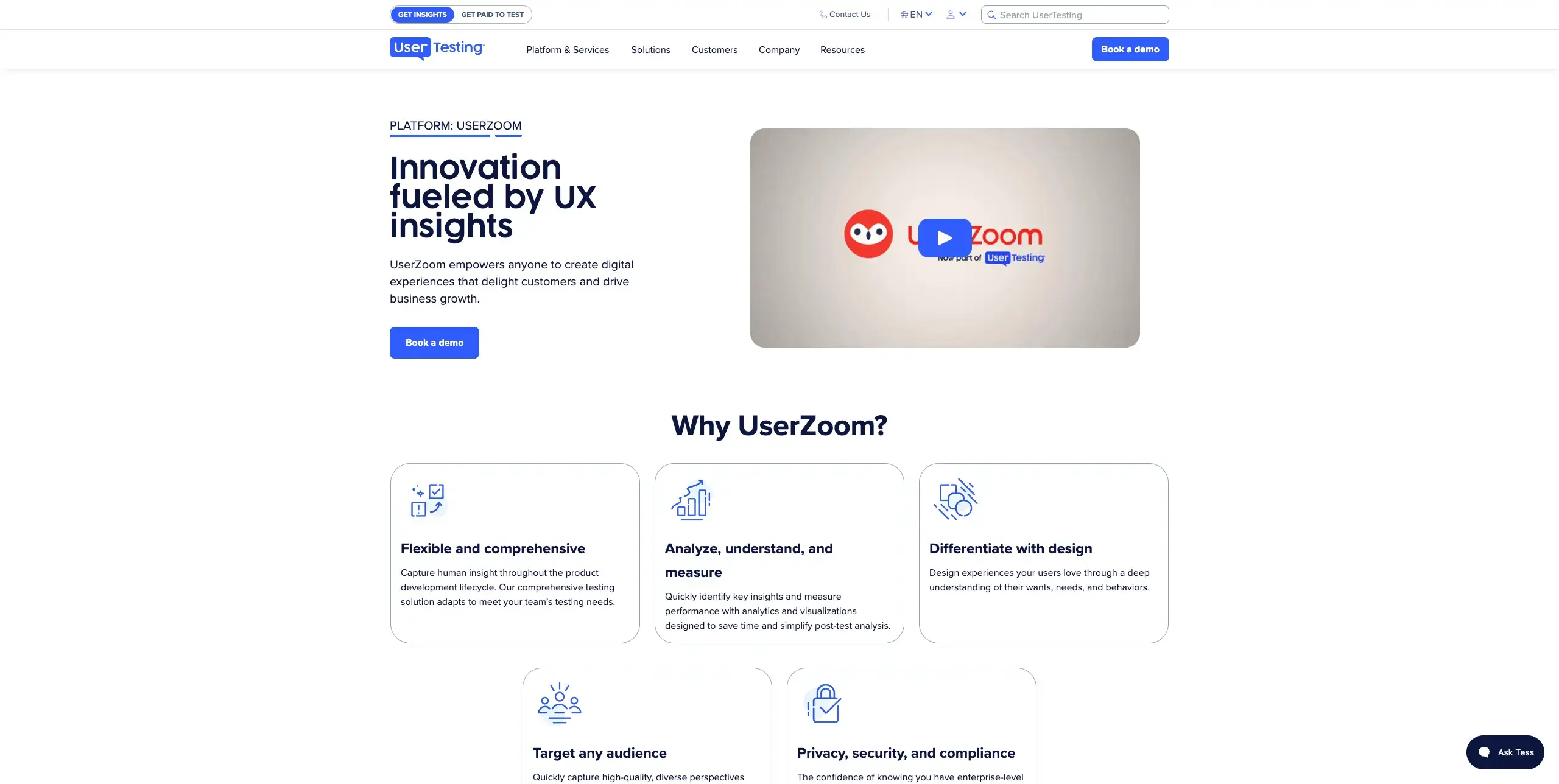
UserZoom, now part of UserTesting, offers flexible card sorting options for teams running qualitative and quantitative studies. It's worth noting that card sorting is only available at the enterprise tier, and pricing isn't publicly listed – so it's worth factoring that into your evaluation if you're working with a fixed budget or a smaller team.
Key features
Flexible testing options: Give your card sorting participants the opportunity to come up with their own categories through open card sorting or provide them with predefined categories for closed card sorting.
Self-guided training: Access the UserZoom Academy for extra learning and guidance if you’re new to card sorting and UX research.
Plans and pricing
Enterprise plans: Card sorting is only available at the Enterprise level – contact for pricing.
4. Optimal Workshop
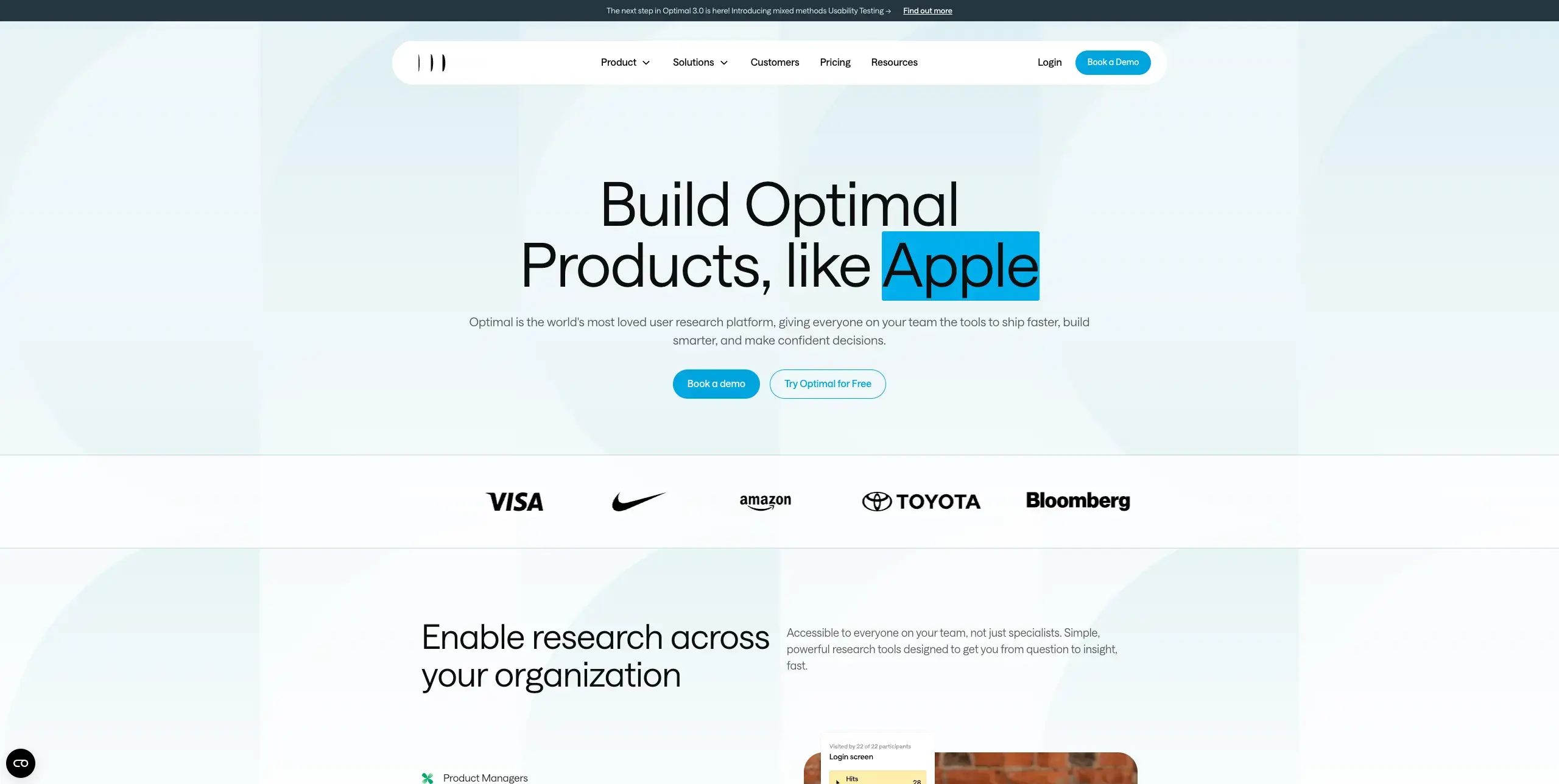
Optimal Workshop offers a wide range of UX research and testing tools, including a dedicated card sorting feature. It comes with a solid set of card sorting capabilities and several analytical approaches for understanding how users group and organize information.
Key features
Data visualizations: Multiple ways to analyze your results, including similarity matrices, dendrograms, a standardization grid, and 3D cluster view – giving you several angles on how participants grouped your content.
Session replays: Watch back individual participants' sorting sessions to see where they hesitated or got confused, adding qualitative context to the quantitative analysis.
Exportable reports: Download your card sorting results as spreadsheets to share with your team and analyze further.
Plans and pricing
Starter: $199/month (billed annually). Includes 5 studies launched per year, unlimited seats, unlimited participant responses per study, and all tools and study types, including card sorting.
Enterprise: Custom pricing. Everything in Starter, plus enterprise-grade security, multiple workspaces, admin controls, and a dedicated Customer Success Manager.
5. UX Metrics
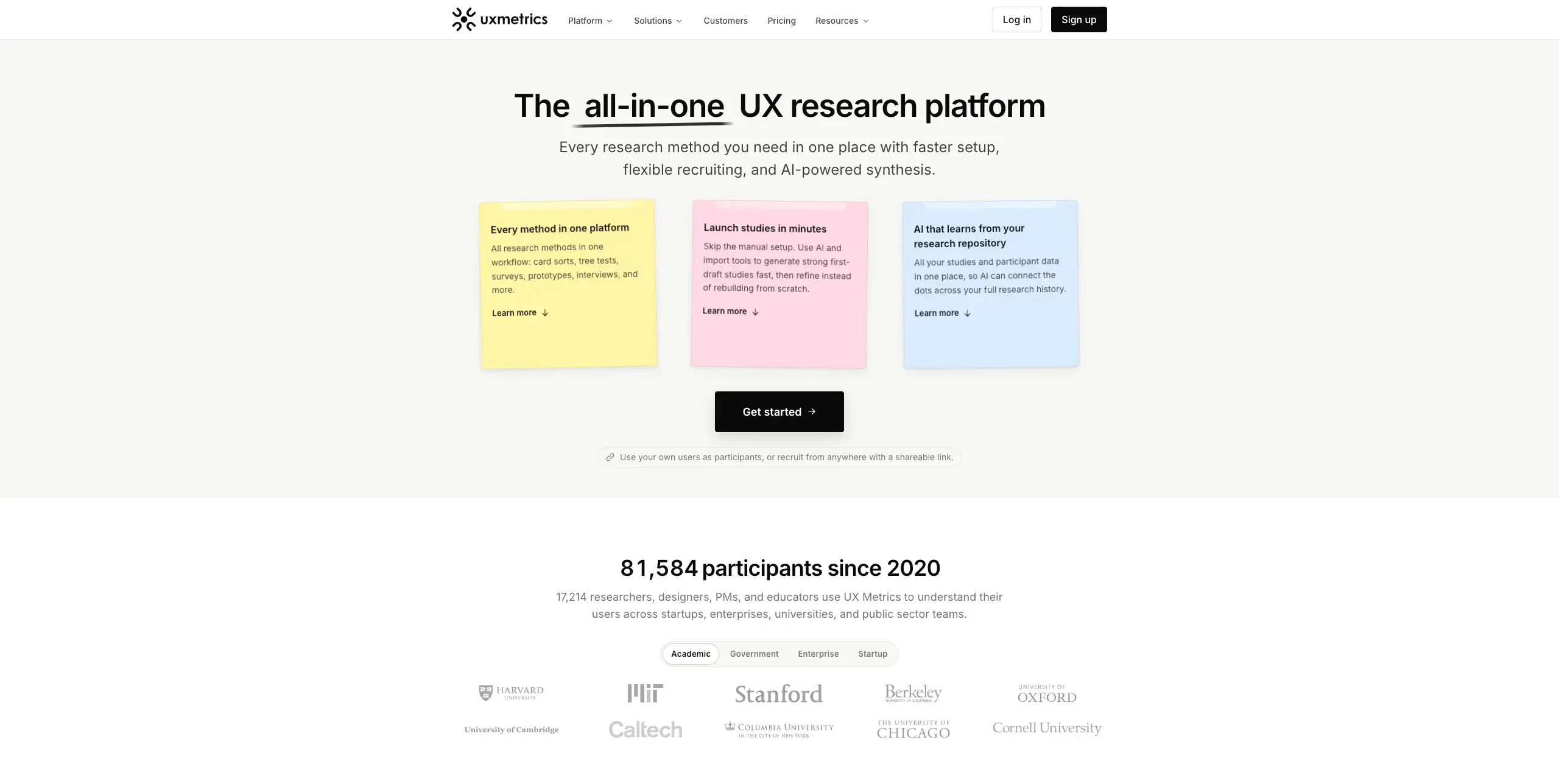
UX Metrics is a remote card sorting and tree testing platform used to gain qualitative insights. From inviting participants to evaluating agreement scores and frequency rankings, UX Metrics offers a clear and guided experience for those wanting to run card and tree sorting tests.
Key features
Flexible testing options: Choose from open, closed, and hybrid card sorting methods.
Focus on individuals: UX Metrics lets you take a granular approach and observe each participant's time spent completing a study, sort the results, and easily exclude or delete when needed.
In-depth analysis: Generate frequency and agreement rankings, making it easy to see user preferences and patterns in how content is grouped.
Flexible testing: Run moderated and unmoderated testing, as well as options for in-person and remote.
Plans and pricing
Free: Publish one study with one participant, plus access to their data analysis tools.
Pro: $49/seat/month (or $499/year). Includes unlimited studies and participants, with advanced grouping and filtering for card sorting results.
6. Maze
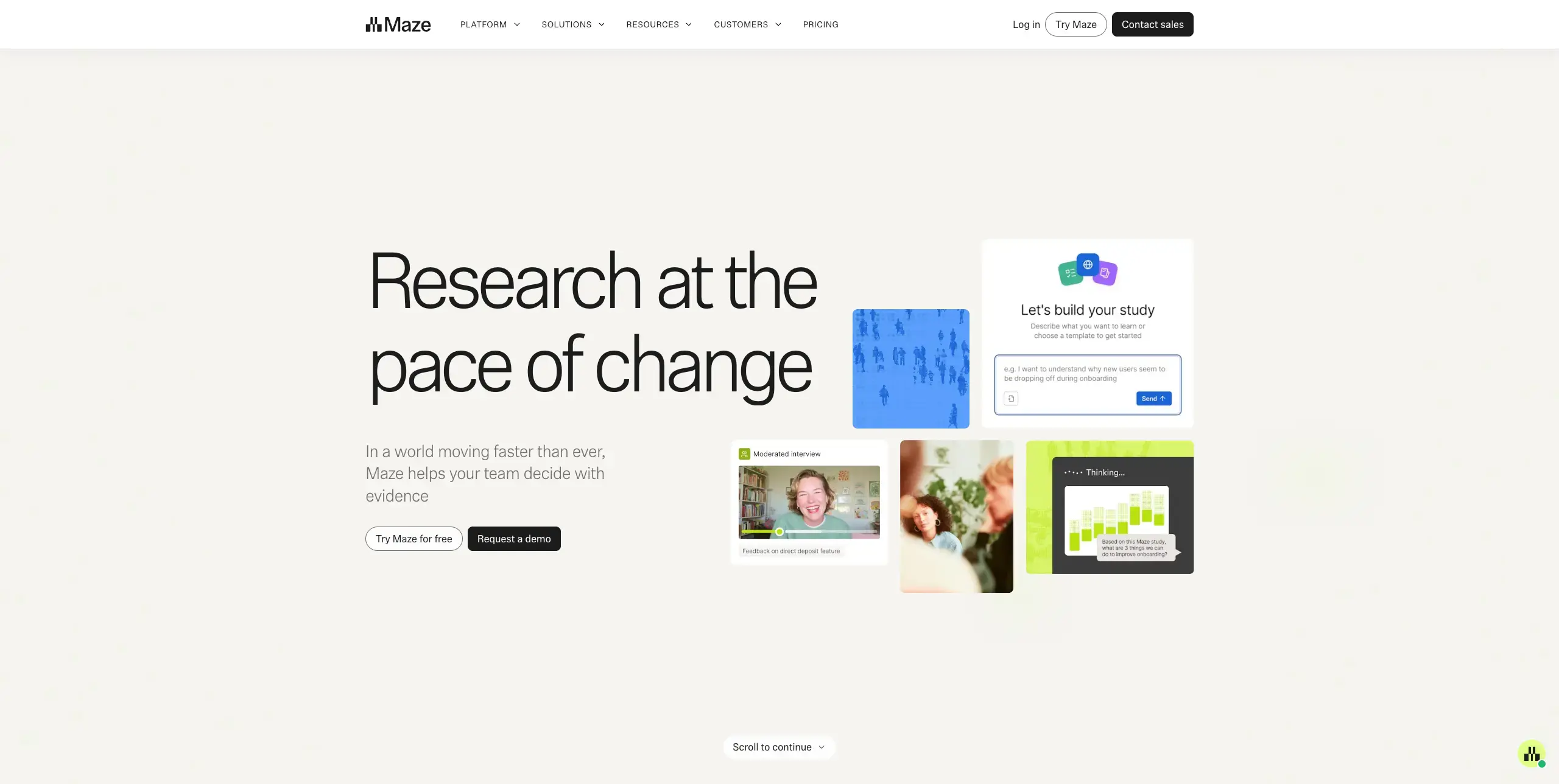
Maze offers closed and open sorting methods, a swift card creation process, and robust result analysis tools, all presented through a sleek UI to ensure a seamless user experience.
Key features
Intuitive card creation: Whether you want to add cards, include custom images, rearrange the order, or make other modifications, Maze’s drag-and-drop card sorting tools make the process simple.
Card sorting options: Randomize how cards are displayed to participants and allow for partial sorting, where testers are only tasked with sorting a subset of cards.
Analysis tools: Evaluate your results and spot trends, relationships, and other patterns through similarity and agreement matrices.
Plans and pricing
Free: 1 study per month, with 5 seats.
Starter: Starting at $99/month (doesn't include card sorting). Everything in the free plan, and unmoderated research toolkit, research-ready templates, and pay-per use panel credits.
Enterprise: Custom pricing. Maze's card sorting feature sits behind the Enterprise tier only. Teams that want card sorting in Maze will need to talk to sales for Enterprise pricing.
7. Userlytics
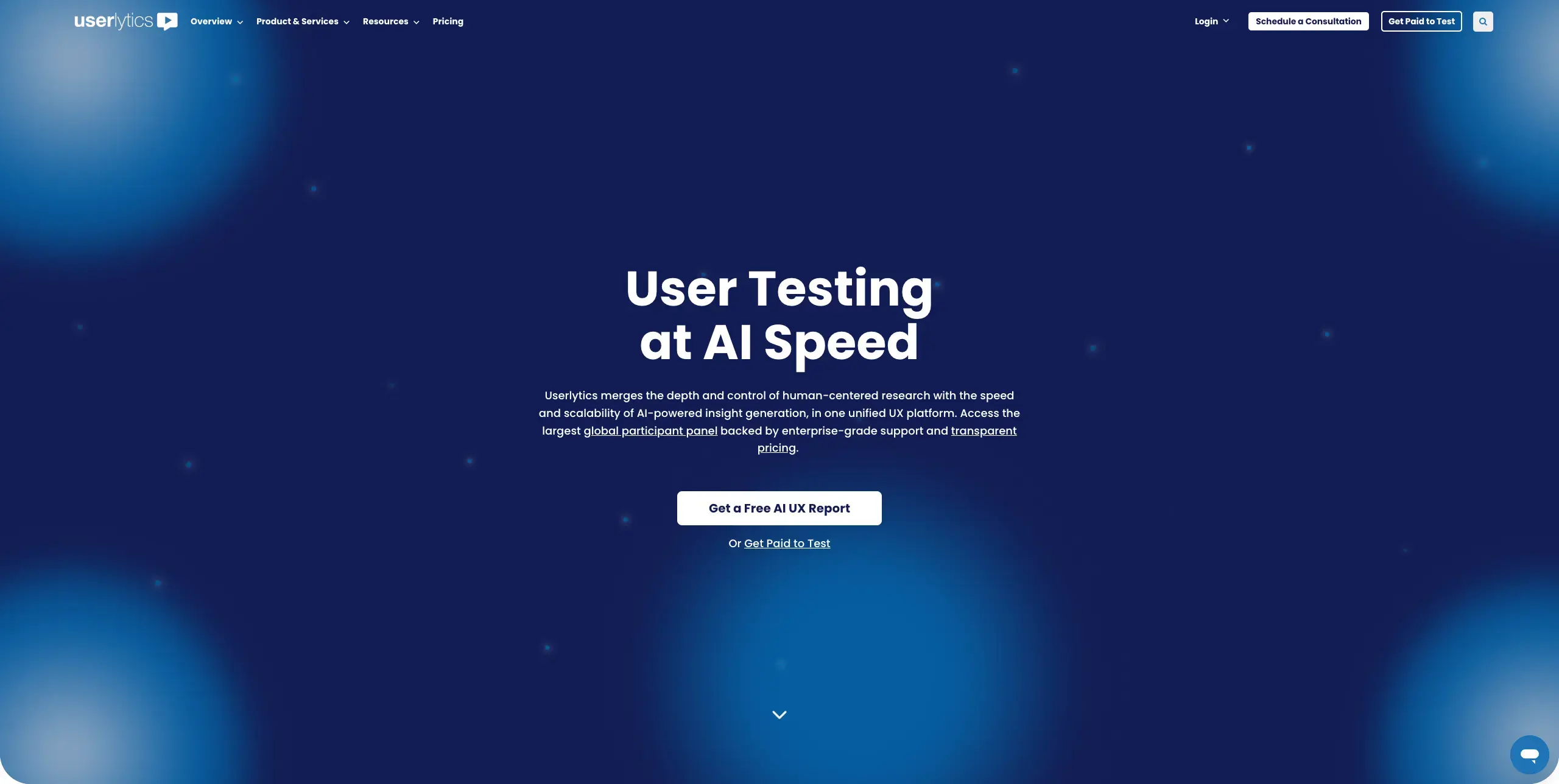
Userlytics supports a range of card creation options alongside detailed reporting and analytics, making it a solid option if you're looking to go deeper into how your content structure lands with users.
Key features
Card sorting customization: Userlytics lets you upload different cards to evaluate. You can define the categories you want to test for closed card sorting, allow participants to create the categories themselves for open card sorting, or combine both methods with hybrid card sorting. You can also randomize the order in which the different elements (categories and cards) are shown to participants during the study.
Video recordings: Record moderated card sorting sessions.
Advanced analytics: Analyze and share data and insights and leverage AI-based recommendations.
Plans and pricing
Enterprise: From $34/session, this plan ensures you only pay for usage. The Enterprise pricing page includes a calculator with toggle buttons for picking out features of what you'll use.
Self-Recruitment: From $699/month, you bring your own participants rather than recruiting through Userlytics.
Limitless: Select your preferred features, including access to card sorting.
8. Card Sorts by UserBit
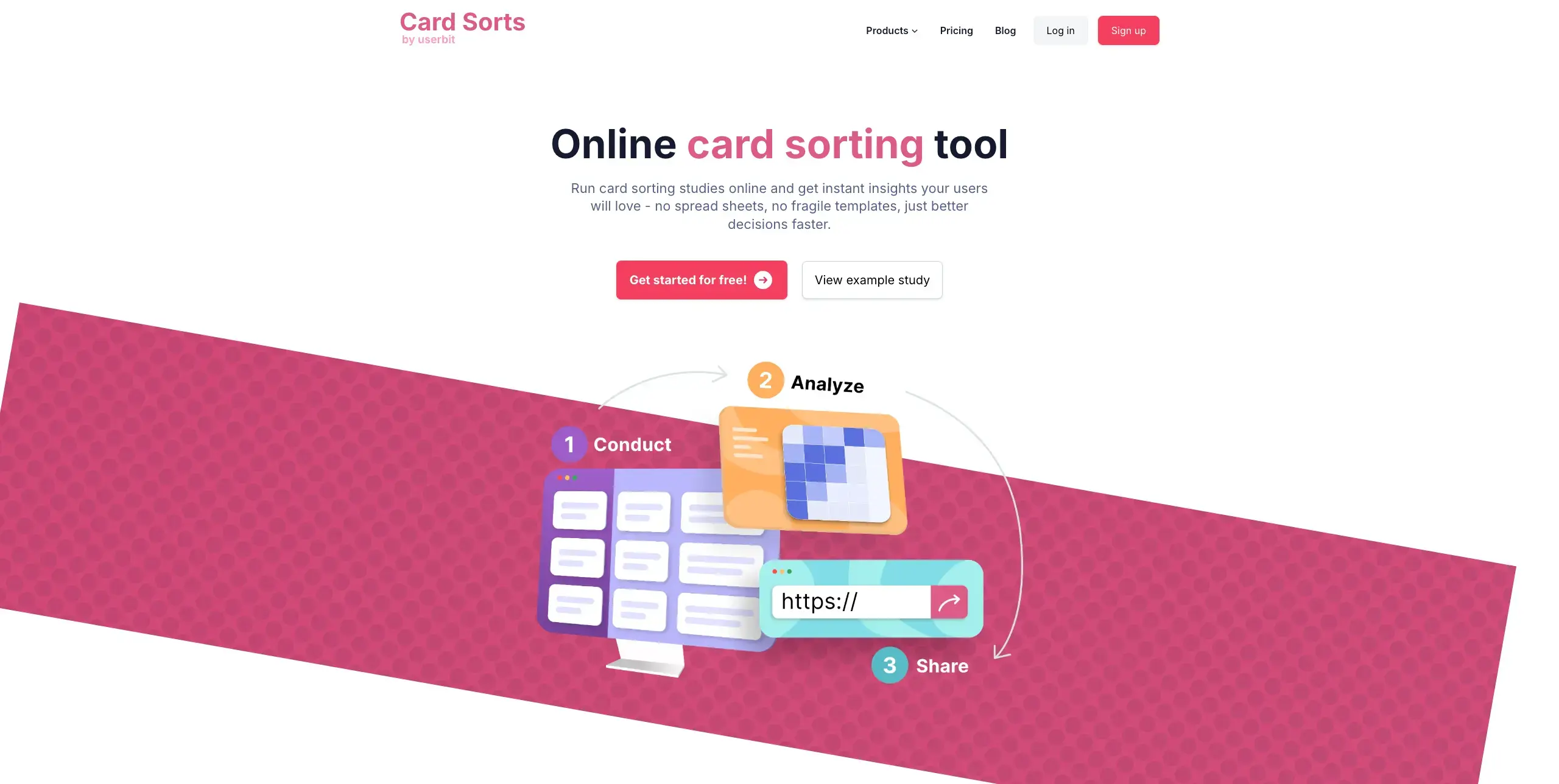
UserBit's card sorting tool lives as its own standalone product, separate from UserBit's other UX tools (like its research repository, persona maker, and journey mapping tools, which are priced and sold individually). It's built specifically for running and analyzing card sorts, without folding in unrelated features.
Key features
Open, closed, and hybrid card sorting: Pick the method that fits your research, with one-click randomization of cards or categories to help reduce bias.
Real-time analysis: Monitor sessions live as participants sort, then turn responses into frequency charts and similarity matrices without needing a separate spreadsheet.
Client-ready sharing: Share results via public or protected links (no participant login required), give stakeholders access through a client portal, and export results as CSV or PDF.
Plans and pricing
Free: $0/month. Includes 1 active card sort study, unlimited inactive/read-only studies (for up to 6 months), and unlimited team members.
Unlimited: $15/month. Includes unlimited card sort studies, unlimited team members, pre/post questionnaires, CSV/PDF exports, and a client portal for stakeholders.
9. UXArmy
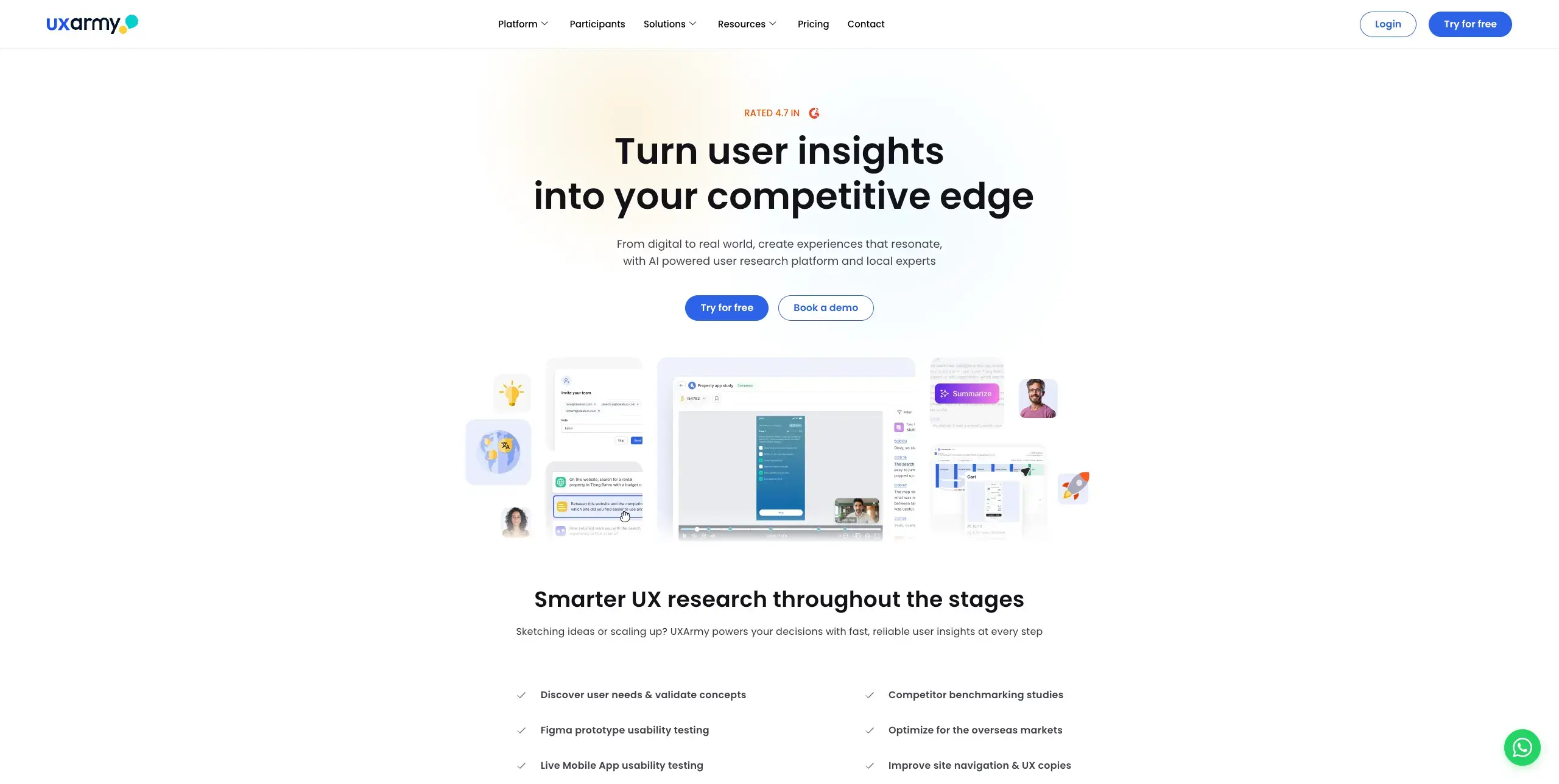
UXArmy is a remote user research platform offering usability testing, research, and participant recruitment. Its card sorting solutions facilitate efficient user research and information organization, enabling easy card creation, customization, and analysis.
Key features
Card sorting options: Participants can create categories in an open card sort, sort cards into given categories in a closed card sort, or create categories in addition to pre-built categories using a hybrid card sort.
Built-in screeners: Add a screener or a post-test questionnaire to your card sort to ask additional questions.
Decrease bias: UXArmy decreases the influence of predictable card sequences by shuffling cards for each participant.
Plans and pricing
Free: Includes one seat and a monthly credit allowance for unmoderated studies, including card sorting.
Starter: From $25/month, with participant panel access and AI insights.
Pro: From $82/month, with full recordings, user interviews, and team collaboration.
Organization: Custom pricing for SSO, SLAs, and custom contracts.
10. kardSort
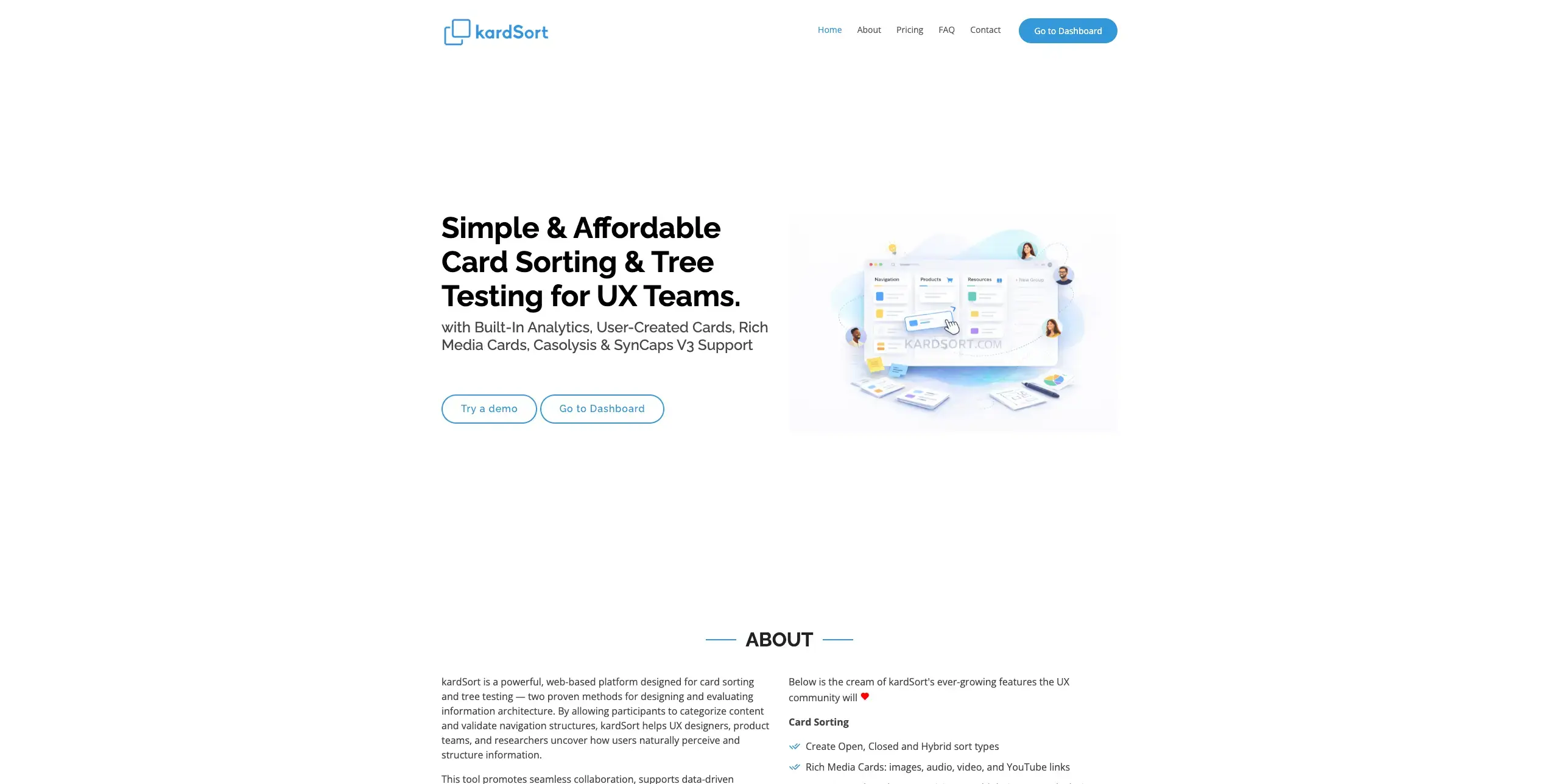
kardSort combines card sorting and tree testing in one platform, with built-in analytics for both. It's positioned as a budget-friendly alternative to premium tools like Optimal Workshop and UXtweak, and its free tier still gives you a genuine no-cost way to try the basics before committing to a paid plan.
Key features
Multiple card sorting formats: Choose open, closed, or hybrid sorting, with support for rich media cards – images, audio, video, and YouTube links.
Built-in analytics: Similarity matrix, participant agreement, card ambiguity, and hierarchical clustering dendrograms included out of the box.
Export your results: Export in CSV, SynCaps V3, or Casolysis formats for further analysis.
Plans and pricing
Free: 1 published study, 10 cards, 10 participants, and 7-day data retention.
Starter: €11 for one month of access (one-time payment, not a recurring subscription). Includes 5 published studies, 1,000 cards, 1,000 participants, and 30-day data retention.
Premium: €25 for one year of access (also a one-time payment). Includes 100 published studies, 1,000 cards, 1,000 participants, and 90-day data retention.
Enterprise: Custom pricing for teams needing unlimited flexibility, multiple accounts, and dedicated support.
11. xSort
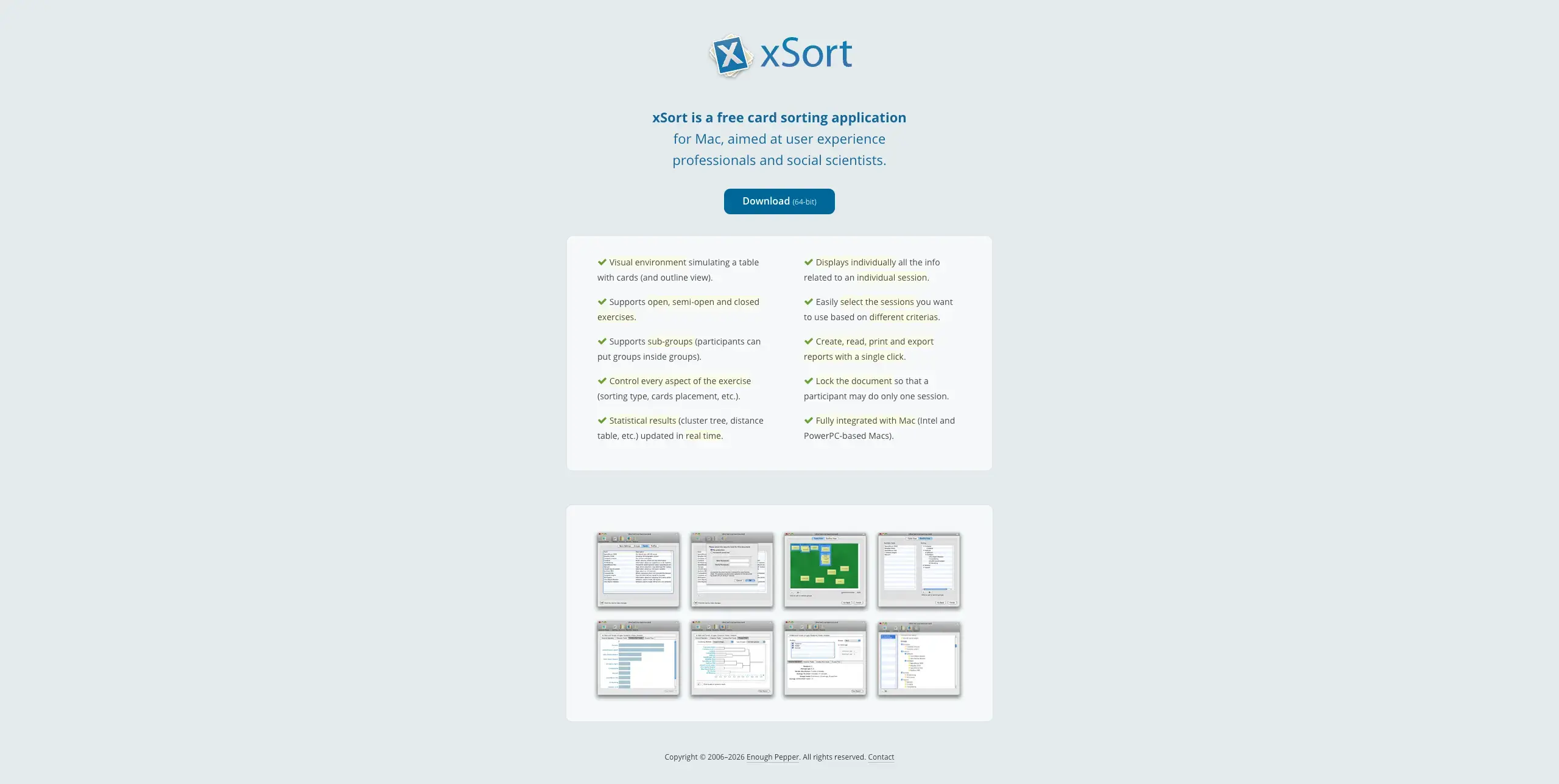
xSort is a free downloadable card sorting tool for macOS that covers a lot of the same functionality that you’ll find in paid counterparts.
Key features
Visual interface: Users are presented with a card-like table that's easy to interact with, along with the option for an outline view.
Flexible card sorting capability: Control every aspect of your card sorting exercise, including the method, the order of cards, and more.
Plans and pricing
Free: This is a free card sorting application.
Other software apps that have built-in card sorting tools
It’s worth mentioning that there are apps outside of dedicated UX research tools that include card sorting functionality. For example:
Figma (FigJam): Figma offers a free card sorting template in FigJam that lets you run collaborative sorting exercises using sticky notes and categorization boards. It's a good option for in-person or moderated sessions where you want to watch participants sort in real time, though it lacks the automated analysis (like similarity matrices and dendrograms) that dedicated tools provide.
Miro: Similar to FigJam, Miro's whiteboard format supports card sorting through draggable elements and templates. It works well for workshops but requires manual analysis.
Trello: Trello's board-and-card structure lends itself to basic card sorting exercises, though it wasn't designed for research and doesn't include any built-in analysis features.
These tools can be a practical starting point if they're already part of your workflow, especially for quick, informal sorting exercises. However, if you need built-in participant recruitment, automated analysis, or the ability to run unmoderated studies at scale, a dedicated card sorting tool will save you significant time.
How to choose a card sorting tool
The right tool depends on what you need from your research, not just which one has the longest feature list. A few things worth weighing:
Sorting methods you need: If you're exploring how users naturally think about your content, prioritize strong open card sorting support. If you're validating an existing structure, closed card sorting matters more. Hybrid sorting gives you a bit of both, but not every tool supports it.
Analysis depth: Similarity matrices and dendrograms turn raw sorting data into visual patterns you can act on quickly. If a tool only gives you raw exportable data, you'll be doing that analysis yourself.
Participant recruitment: If you don't have a ready pool of testers, look for a tool with a built-in research panel or screener questions, rather than one that only supports self-recruitment.
Collaboration features: Shareable results, exports, and commenting make it easier to get your team and stakeholders aligned on findings, especially if card sorting results are feeding into a broader IA or navigation decision.
Where it fits in your workflow: If you're only ever going to run card sorts, a focused tool may be enough. If you're likely to need tree testing, surveys, or usability testing alongside it, a platform that covers multiple methods can save you from managing several subscriptions.
How Lyssna can help with card sorting
If you're not sure how users naturally group your content, it's hard to build navigation that feels intuitive. Lyssna's card sorting feature helps you find out – with open, closed, and hybrid sorting methods, built-in analysis tools like agreement and similarity matrices, and access to a research panel of 690,000+ participants when you need fast results.
FAQs about card sorting tools

Jeff Cardello
Freelance SaaS content writer
Jeff Cardello is a freelance writer who loves all things tech and design. Outside of being a word nerd, he enjoys playing bass guitar, riding his bike long distances, and recently started learning about data science and how to code with Python.

You may also like